Alcúdia
Not the beach — the walled town two kilometres inland, built on the bones of a Roman capital, where you can walk thirteenth-century ramparts above two thousand years of history.
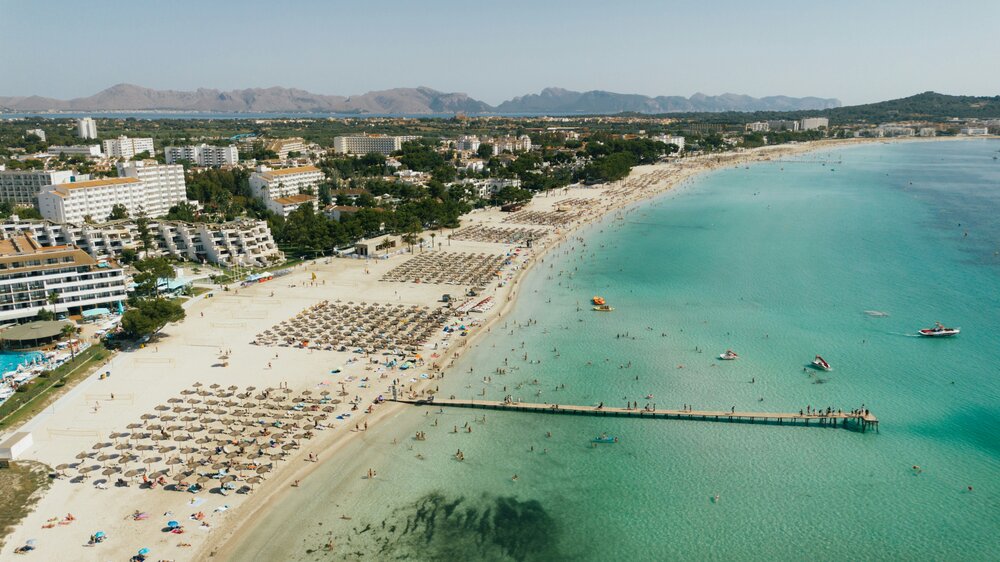
Mention Alcúdia to most people and they picture the beach — the long sweep of sand and the hotels behind it down at the port. But the Alcúdia worth knowing is two kilometres inland and two thousand years older: a walled medieval town built on the bones of a Roman capital, ringed by thirteenth-century ramparts you can still walk, with a labyrinth of stone streets inside that empties out the moment the day-trippers leave.
This is the north's history lesson, and it is a good one. The Romans founded Pollentia here in 123 BC — the most important city in the Balearics for four centuries — and when the empire fell and pirates came, the survivors moved inland to found Pollença, leaving the coast to the Moors, who called the hilltop farmstead al-kudja. King Jaume II walled the town in 1298, and those walls, with their twenty-six towers, still define it. Layer on layer of the island's past sits within a few hundred metres.
The walls, the streets, the ruins
Start on top of the medieval walls — accessible at several points, free, and giving a circuit of views over terracotta rooftops to the Tramuntana. Inside, Carrer Major threads through the old town past sixteenth-century merchant casals with their hidden courtyards, the neo-Gothic Sant Jaume church, and a tangle of side streets full of galleries and good small shops. Time your visit for the Sunday or Tuesday market, when stalls fill the streets and the town is at its liveliest.
Just outside the walls lie the Roman ruins of Pollentia — the forum, the residential quarter of La Portella, and a small theatre cut directly into the bedrock that once seated two thousand and is among the best-preserved on the island. The accompanying Museu Monogràfic, by the church, holds the sculptures, coins and ceramics drawn from the site. For an hour's walk you cover Roman, medieval and modern Mallorca in a single afternoon.
Beyond the town
Alcúdia sits at the neck of a peninsula between two bays, which puts an unusual range within reach. The S'Albufera wetlands — the island's great birdwatching reserve — are minutes south. The wild, hard-to-reach coves of the Victòria peninsula, including the Caribbean-blue Coll Baix, lie just north. And the Sa Bassa Blanca museum (the Jakober Foundation), in an extraordinary Hassan Fathy-designed house above the bay, holds a singular collection — a gallery of Old Master child portraits and a sculpture park — that most visitors never discover.
Where to stay
The recent arrival of design-led townhouse hotels inside the walls has changed Alcúdia for the better. Restored mansions — the Bordoy group's stylish conversions, the Forum Boutique Hotel and a handful of intimate petit hotels built into old casals with courtyard pools — let you stay inside the old town, which is the whole point: you have the ramparts and the stone streets to yourself once the coaches have gone. For families wanting the beach as well, the smarter move is a private villa on the quieter Victòria side, with the old town a short drive for dinner.
Where to eat
The old town's pleasure is the courtyard dinner — restaurants tucked into the casals and the plazas, where Mallorcan cooking is served under the stone arches. The local cellers do the traditional version; the newer townhouse-hotel kitchens do the polished one. Down at the port and along the bay there is the usual run of seafront fish places, the better of which want booking in season. As ever, we point guests to the table that fits the evening rather than the one with a view of the car park.
When to come
Spring and autumn are best — the walls and ruins are far more pleasant walked in mild weather, and the old town keeps its calm before and after the July–August beach crowds. Summer is hot and the port end is busy, though the old town empties beautifully in the evening once the day-trippers leave. Stay inside the walls for at least a night to understand why Alcúdia is the most historically rewarding base in the north.
Ready to see Mallorca properly?
Tell us how you like to travel, and we will tell you where on the island you belong — and arrange every detail once you are there.
Start your inquiry