Cala d'Or
The "little Ibiza" of the southeast — whitewashed cubic houses built by an Ibizan artist in 1930, strung along a chain of turquoise pine-clad coves.
They call Cala d'Or "the little Ibiza," and for once the nickname is earned by history rather than marketing. In 1930 an Ibizan artist, Josep Costa, found an unspoilt stretch of the southeast coast — pines, rocks, turquoise coves — and began building whitewashed, cubic, Ibizan-style houses for himself and his artist friends. That dazzling white architecture, low-rise and Mediterranean, still defines the place and sets it apart from every other resort on the island.
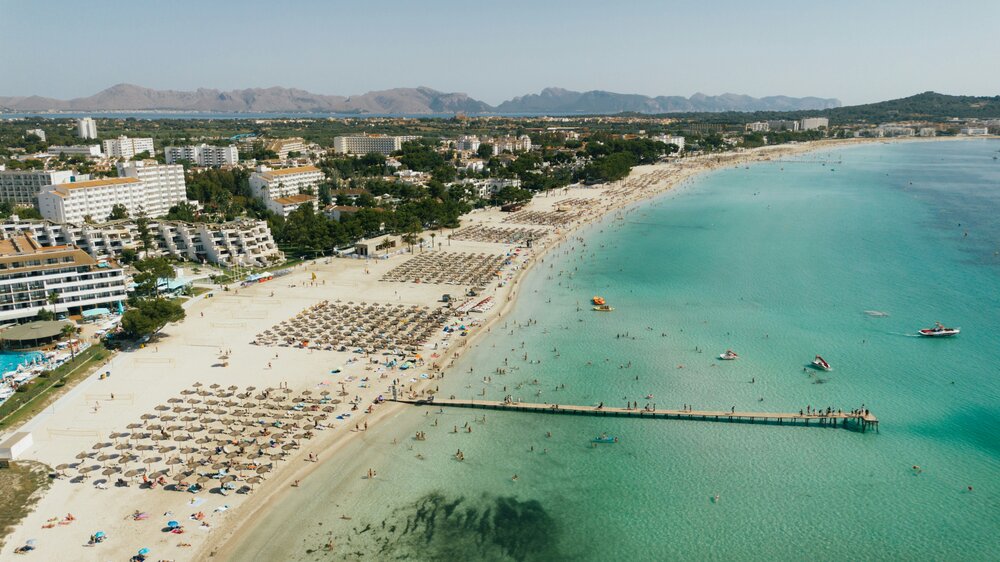
Cala d'Or is the largest and most polished resort in the Santanyí municipality on the southeast coast, about an hour from Palma. What makes it special is its structure: rather than one beach, it is a chain of small, fine-sand coves — calas — strung along a pine-clad coast, each a turquoise pocket between rocky headlands, linked by walkable paths and an elegant marina. It is lively without being brash, and beautiful in a way the package resorts are not.
The coves
The pleasure here is collecting the coves. Cala Gran is the largest and most family-friendly; Cala Esmeralda is the prettiest, its green-blue water living up to its name; Cala Ferrera and Cala Serena are quieter and favoured by snorkellers and divers; Cala Egos, further west, is the local, low-key one. All are fine sand and clear water, all walkable, and all small — which is the charm and, in peak summer, the catch. The smart play is knowing which cove to be at, and when.
The marina, and what's nearby
The marina at the heart of Cala d'Or — one of the most important on the east coast, with over 560 berths — is lined with restaurants and is the natural place for the evening stroll and a boat day along the southeast coast. Inland and along the coast lie some of the island's treasures: the Mondragó Natural Park, ten minutes away, with its protected wild beaches of S'Amarador and Cala Mondragó; the medieval Santueri Castle on its hilltop; and the working fishing village of Porto Petro next door. The Cala d'Or International Jazz Festival each June adds a cultural note.
Where to stay
Cala d'Or runs from family resort hotels to private seaside villas tucked among the pines above the coves — and it is the latter that suit the discerning guest. A villa with a pool and a path down to a quiet cala gives you the beauty of the coast with the privacy the resort hotels can't. There are also polished boutique options near the marina for those who want to walk to dinner. We steer guests toward the private-villa-and-cove version of Cala d'Or rather than the busy resort centre.
Where to eat
The marina is the dining heart — waterfront restaurants overlooking the yachts, with Port Petit the long-standing standout for refined Mediterranean cooking on a terrace above the water. Around the coves and the pedestrian streets sit relaxed seafood and Mediterranean tables. As ever, the marina's best seats want booking in season, and a sunset table over the water is worth securing ahead.
When to come
Late spring and early autumn are ideal — the coves warm and swimmable, the crowds thinner, the walking and the Mondragó trails at their best. July and August are lively and the small coves fill, so timing your beach hours matters. Come for the coves, the marina and the whitewashed beauty — base in a villa among the pines — and Cala d'Or gives you the prettiest stretch of the developed southeast.
Ready to see Mallorca properly?
Tell us how you like to travel, and we will tell you where on the island you belong — and arrange every detail once you are there.
Start your inquiry