Colònia de Sant Jordi
Where Mallorca runs out — a white fishing village among salt pans and wild beaches, and the boat-gateway to the untouched Cabrera archipelago.
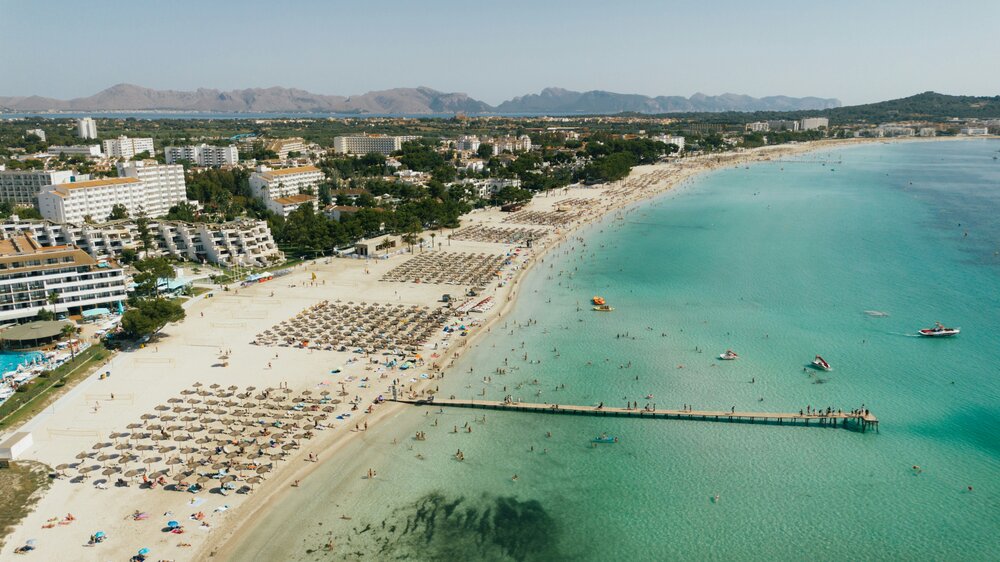
Colònia de Sant Jordi is where Mallorca runs out — a low, white fishing village at the island's southern tip, surrounded by salt pans, wild white-sand beaches and turquoise shallows, and best known as the jumping-off point for one of the Mediterranean's last truly untouched places: the Cabrera archipelago. It is the quiet, elemental south, a world away from the developed coasts.
The village itself is modest and authentic — a small promenade and marina where the gastronomy and life concentrate, ancient stone houses beside the newer building, and a fishing tradition that persists, the boats still going out for the giant tuna as they have for generations. Around it spread the salines, the working salt pans, and a coast of secluded coves and lighthouses. For the traveller who wants the south's wild beauty and the gateway to Cabrera, this is the address.
The beaches and the salt-pan coast
The beaches here are among the best in the south. The famous Es Trenc — four kilometres of white sand and dune, the closest Mallorca comes to the Caribbean — lies just up the coast, and a string of beautiful beaches unfolds on either side of the village: Platja d'es Dolç, and the walkable wild coves of Es Caragol and Es Carbó, some of the most transparent water on the island. Many of the finest spots can only be reached on foot or, better, by boat. The 1863 Ses Salines lighthouse, at the island's southernmost point, guards this steep, beautiful coast.
Cabrera
The reason many come is offshore. From Colònia de Sant Jordi's moorings, boats cross to the Cabrera archipelago — nineteen islets forming a national park of extraordinary, protected beauty: crystalline water, rare wildlife, a famous blue cave, and five hundred species of marine life beneath the surface. Day trips and sunset sailings make this one of the great excursions on the island, and Colònia de Sant Jordi is its gateway. A boat day to Cabrera is, for many guests, the highlight of a southern stay.
Where to stay
This is the quiet, natural end of the island, and the accommodation follows suit — a small number of well-placed coastal hotels and, for the discerning, private villas and country fincas in the surrounding land toward Ses Salines and the salt pans. The villa is the move here: space, a pool, the wild beaches and the Cabrera boats minutes away, and the genuine quiet of the south at night. For guests who want nature, beaches and seclusion over resort polish, few places on the island deliver it as purely.
Where to eat
The dining concentrates on the marina and promenade — fresh fish and Mediterranean cooking with the boats in front, the catch about as local as it gets given the working fleet. The nearby towns of Ses Salines and Santanyí add their own tables and market produce. As ever, the better harbour-front seats want booking in season, especially around a Cabrera day.
When to come
Late spring through September is the season — the beaches and the Cabrera crossings at their best, the water warm and clear, the salt-pan light at its most beautiful. The shoulders are ideal for the coastal walking — the cliff hike to the Ses Salines lighthouse among them — with the wild beaches near-empty. Come for the wild south, the great beaches and the gateway to Cabrera — base in a villa near the salt pans — and let this be the most elemental, untouched corner of your Mallorca.
Ready to see Mallorca properly?
Tell us how you like to travel, and we will tell you where on the island you belong — and arrange every detail once you are there.
Start your inquiry