Port de Pollença
Where Mallorca's families have summered for a hundred years — a pine-shaded promenade, a calm sailing bay, and the road to the wild north starting at the door.
Port de Pollença is where the island's well-heeled families have summered for generations, and it shows in the things it refuses to do. There is no high-rise strip, no nightclub quarter, no sense of a place built quickly for mass tourism. Instead there is a long, calm bay at the northern end of the island, a pine-shaded promenade that has barely changed in a century, and an air of unhurried, slightly old-fashioned good taste.
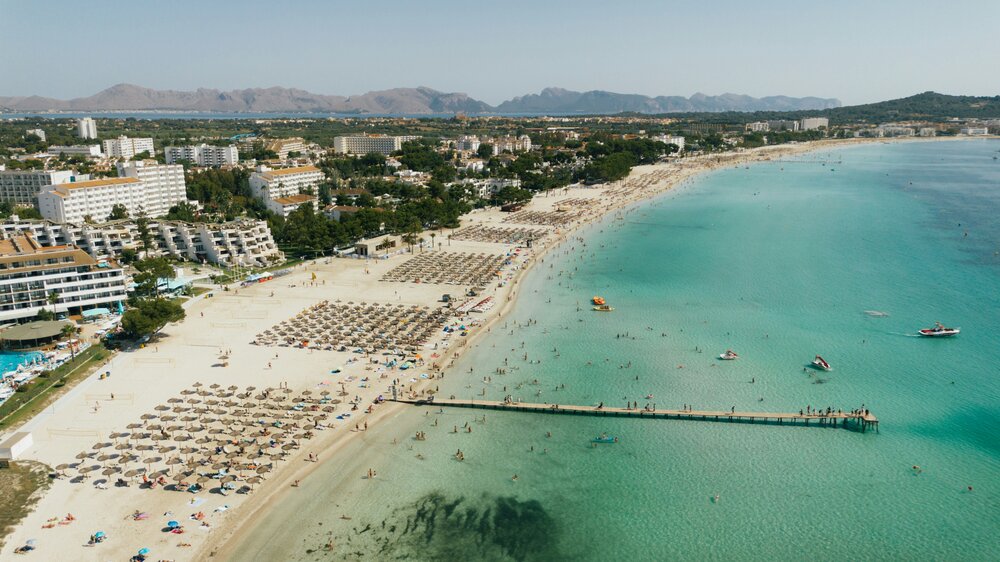
Seven kilometres from Pollença town and a world away in mood, the port sits at the head of a sheltered bay ringed by mountains, with the Formentor peninsula sealing off the horizon to the north. The water is shallow, clear and exceptionally calm — which is exactly why it draws sailing families and why the light here, with the Tramuntana behind it, drew the painters who first put the place on the map in the early 1900s.
The Pine Walk
The defining stretch is the Pine Walk — the Passeig dels Pins — a seafront promenade running beneath mature pines along the northern arm of the bay, past the old summer villas of Mallorcan and mainland families. Walking it at the start or end of the day, with the mountains catching the light across the water, is the single most characteristic thing to do here. It is slow, shaded, and quietly beautiful, and it tells you everything about the kind of place this is.
The bay itself is made for the water. Two long sandy beaches — Platja d'Albercutx to the north of the marina, the town beach to the south — give three kilometres of gentle, swimmable shore. The calm, steady conditions make it one of the best places on the island for sailing, paddleboarding and learning to windsurf, and the marina is a natural launch point for the day on the water that most guests want.
The gateway to Formentor and the wild north
Port de Pollença's position is its trump card. The road out to the Formentor peninsula — the dramatic, cliff-edged cape with its lighthouse and its single legendary hotel — begins here, and the famous Mirador viewpoint is a short, spectacular drive away. The rocky coves of Cala Sant Vicenç are minutes in the other direction. Few bases on the island put this much drama within such easy reach of such a calm home harbour.
Where to stay
The grande dame is the Hotel Illa d'Or, an elegant property anchoring the quiet end of the Pine Walk since the 1920s — the address for those who want the old-world, sea-front Port de Pollença at its most authentic. For a contemporary, adults-only alternative along the same waterfront, a handful of design-led boutique hotels offer the bay without the period formality. And the hills behind the bay hide some of the most impressive private villas in the north — the right answer for families who want space, a pool and the beach a few minutes away. We weigh the three against how the guest likes to travel.
Where to eat
The dining here is relaxed seafront rather than high-gastronomy — fresh fish, Mallorcan classics, and long lunches looking at the water. The serious, destination-restaurant cooking is a short drive inland at Son Brull near Pollença town; in the port itself, the pleasure is a simple grilled-fish lunch on the front and a sundowner on the Pine Walk. As always, the better waterfront tables want booking ahead in high season.
When to come
Late spring and September are ideal — warm, calm water, the sailing conditions at their best, and the promenade pleasant rather than packed. High summer is busy and family-heavy, in the genteel way this resort has always been; the bay's shelter keeps the water swimmable and the sailing gentle even then. The port rewards a stay of several nights, used as a calm base for the wild coast and the market town just behind it.
Ready to see Mallorca properly?
Tell us how you like to travel, and we will tell you where on the island you belong — and arrange every detail once you are there.
Start your inquiry