Destinations
Deià: Mallorca’s Storied Mountain Village
A storied mountain village on Mallorca’s northwest coast, long beloved by writers, painters, and those drawn to a quieter kind of beauty.
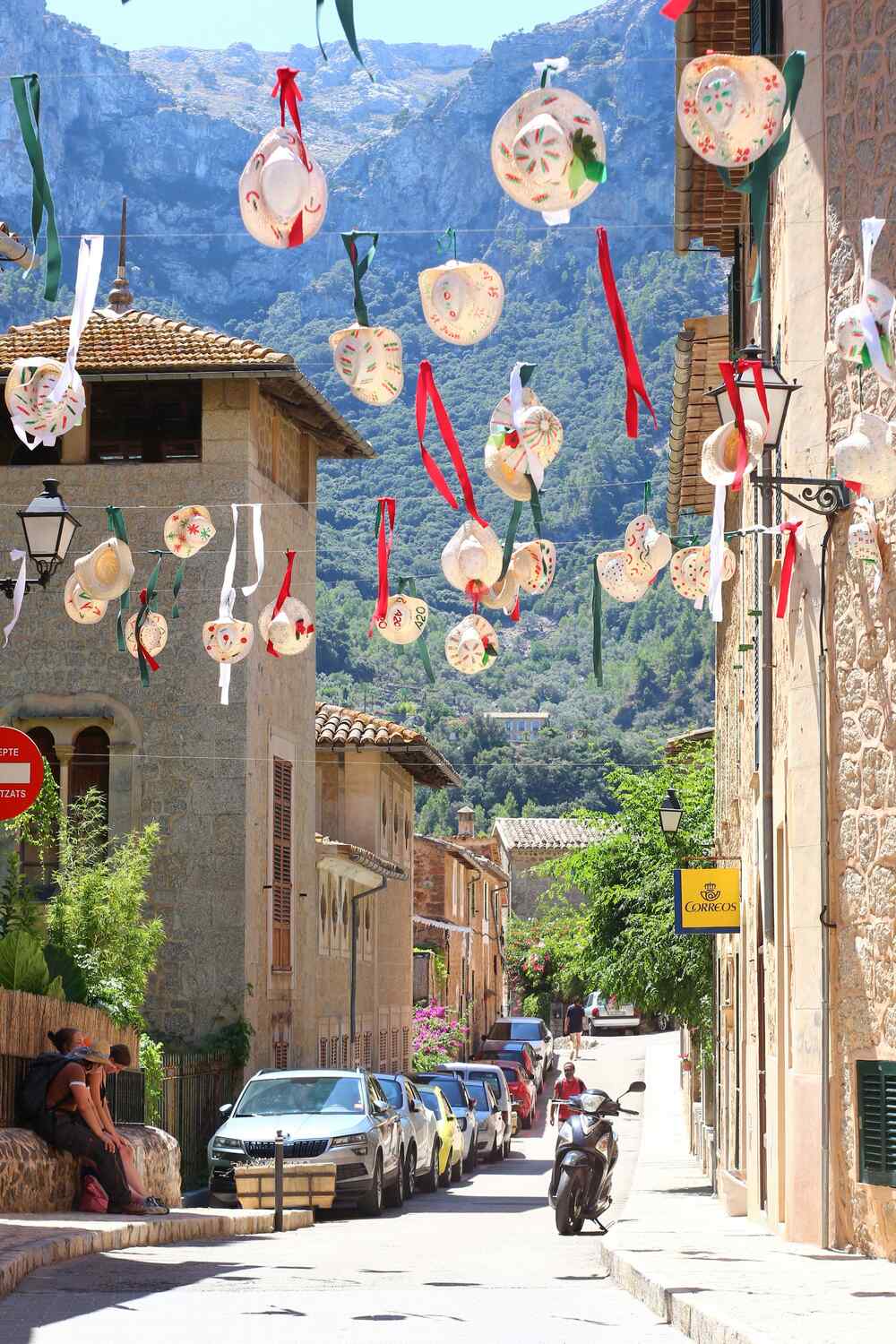
A storied mountain village on Mallorca’s northwest coast, long beloved by writers, painters, and those drawn to a quieter kind of beauty.
Tucked into a ravine where the Teix mountain meets the Mediterranean, Deià is among the most striking villages on the island. Its honey-colored stone houses spill down the hillside toward a glimmer of distant sea, and its reputation as a refuge for the creatively inclined has endured for nearly a century. Robert Graves made his life here. Helen Walsh set her 2014 novel The Lemon Grove against the village’s seductive, sun-warmed backdrop. The pull is not difficult to understand once you arrive.
Deià sits within the Serra de Tramuntana, the rugged spine of the island whose harmonious blend of landscape, culture, and human craft earned it UNESCO World Heritage recognition. As one of the most populated villages in the range, Deià carries that heritage visibly in its terraced olive groves, restored farmhouses, and time-worn footpaths.
The valley has been inhabited since prehistoric times, when early settlers sheltered in hillside caves and drew water from the area’s natural springs. During the eighth century, Arab rule introduced an elegant system of irrigation channels still in working order today, and gave the settlement its name — from ad daia, meaning hamlet.
In the early 1200s, following the Christian reconquest, three Roman Catholic monasteries took root in and around the village: Ca l’Abat, Son Rul·lan, and Miramar. The shield of the first now appears on Deià’s coat of arms. Miramar became the site of a missionary school established by the Mallorcan philosopher Ramón Llull, intended to train scholars who would carry Christian teaching across North Africa.
The next defining figure arrived in 1867. Archduke Lluís Salvador, an Austrian noble of unusual intellectual ambition, came to the Balearics to compile what would become his sweeping encyclopedia of the islands. He fell deeply for the country between Deià and Valldemossa, acquiring substantial land and prohibiting both tree felling and hunting on his properties — a remarkably early act of conservation. From his base at Miramar, he carved out walking paths, built lookouts, and lovingly restored the palace of Son Marroig.
In the 1930s, the English poet Robert Graves arrived seeking quiet from the lingering shocks of the First World War, and found, alongside the silence, a creative partnership with the American poet Laura Riding. The two left at the outbreak of the Spanish Civil War; Graves returned after the Second World War and made Deià his home until his death in 1985. His house drew visitors of considerable distinction — Alec Guinness, Peter Ustinov, Ava Gardner among them — and is now preserved as a museum, Ca n’Alluny.
Much of Deià’s appeal is atmospheric: an unhurried rhythm, exceptional light, and views that reward simply standing still. Days here tend to revolve around long lunches, gentle walks, and the small pleasures of the village itself. Set just off the main road, La Residencia, A Belmond Hotel — once owned by Sir Richard Branson — offers its own gated parking and a discreet hush. Princess Diana stayed here, as did Robbie Williams in the days before his wedding.
The pleasures of Deià reveal themselves slowly. Take time to wander the narrow lanes between sympathetically restored stone houses, and step inside Es Forn, the village’s tiny grocery, where shelves bow under the weight of local oils, wines, cheeses, and preserves. A short climb leads to the cemetery beside the church, where Robert Graves rests beneath a deliberately plain stone — an apt final note for a writer who chose this village as his home for so many years.
The terrain around Deià rewards walkers of every level. Two of the most rewarding routes lead to Miramar Monastery and to Sa Foradada, a dramatic rocky peninsula with one of the most photographed lookouts on the island. Many walkers pair the Sa Foradada route with a visit to Son Marroig, Archduke Salvador’s former retreat, now a quietly compelling museum of his collected effects. In the warmer months, afternoon tea at Restaurant Miró within La Residencia is a gentle indulgence: house-baked scones, fine pastries, and limited-edition teas served beneath the mountain light.
A relaxed thirty-minute walk down through olive terraces brings you to Cala Deià, a small shingle cove with two seafood restaurants set into the rocks. Those who prefer to drive can follow the signposted turn from the main road just north of the village. Deià’s second beach, Llucalcari, lies roughly two miles further on and is reachable only by foot or by sea — an unspoiled stretch known for its natural mud and a relaxed approach to swimwear.
La Residencia, A Belmond Hotel remains the village’s defining address. Acquired by Branson in the 1990s and now under the Belmond group, it appears with regularity on global “best hotels” lists, and the reasons are not difficult to see: a thoughtful spa, a serious kitchen, and a setting that feels almost staged for a film.
S’Hotel d’Es Puig sits in the center of the village and offers a quieter, more traditional stay — simple rooms, generous mountain views, and the kind of calm that defines Deià at its best.
Sa Pedrissa, an adults-only retreat with nine rooms, occupies a 17th-century estate once owned by an Austrian duke. Its hilltop position above Cala Deià is among the finest in the area.
Es Molí Hotel, just outside the village, terraces gracefully into the hillside, with shaded gardens and a private shuttle to its own secluded rock beach at La Muleta.
Sebastian, set in a former stable on the main village street, has built a long and loyal following under chef Sebastian Pasch. The kitchen blends Mediterranean foundations with quiet Asian accents; a candlelit dinner here is, for many regulars, the highlight of a Deià visit.
Within the olive-shaded grounds of La Residencia sit three restaurants: El Olivo, Restaurante Miró, and the more relaxed Tramuntana Grill beside the pool. Each has its merits, but Restaurante Miró’s terrace makes a particularly memorable case for a long lunch.
Ca’s Patró March, the rustic restaurant carved into the rocks at Cala Deià, is for many a non-negotiable stop. The fish and tapas are pristine, the setting unmistakable.
Mirador de Sa Foradada, on the coast road between Deià and Valldemossa, sits directly above the Sa Foradada peninsula. Sunsets from this terrace are difficult to forget. Back in the village, El Barrigón Xelini offers an extensive tapas menu in a warmly traditional setting.
The village lends its name to one of Mallorca’s most respected cultural gatherings. The Deià International Music Festival runs through the warmer months, typically May to September, with many concerts staged in the historic setting of Son Marroig. What began as a modest local initiative has grown into a serious season, drawing classical orchestras and soloists of international standing.
Early autumn brings the Deià Art Festival, a weekend program of talks and exhibitions across art, literature, and music. Its signature event, the Writers’ Walk, sets ten authors at ten secret locations around the village — an elegant way to experience both the village and its literary inheritance.
Owning a home in Deià means joining a quietly distinguished neighborhood: Sir Andrew Lloyd Webber, Michael Douglas, and the publicist Lynne Franks have all chosen the village. Roughly half of the village’s 850 residents are foreign-born, including the descendants of the original creative community who first made Deià their own. The village’s UNESCO designation provides a meaningful safeguard against unsympathetic development, though Deià was never the kind of place to attract it.
A short drive back toward Palma brings you to Valldemossa, a town of cobbled lanes, small boutiques, and quiet cafés. The Real Cartuja monastery is essential. The northbound coast road to Sóller ranks among the more scenic drives in Europe, every bend offering a fresh angle on the sea. Port de Sóller has, with the arrival of the five-star Jumeirah Port Sóller Hotel & Spa, repositioned itself as one of the more sophisticated harbors on the coast.
The guide is here to inspire. When you’re ready to make it happen, we handle everything from finding the right villa to booking the restaurants and experiences that matter to you.
Start Your Inquiry →