Discover Mallorca's art, architecture, and history through private access and expert curation. A guide to serious Mallorca cultural experiences for discerning American travelers.
Cultural Mallorca: Art, Architecture & History Guide
Discover Mallorca's art, architecture, and history through private access and expert curation. A guide to serious Mallorca cultural experiences for discerning American travelers.
Insider Guide
Most American travelers arrive in Mallorca expecting beaches and rosé. A significant number leave without realizing they have just walked past one of the most layered cultural landscapes in the Mediterranean. Mallorca's 3,000-year human timeline, its Moorish palaces, Gothic cathedrals, modernista mansions, and thriving contemporary art scene place it firmly among Europe's most intellectually rewarding destinations. The problem is access. Without deep local knowledge, the most meaningful Mallorca cultural experiences remain invisible behind generic tourist circuits. This guide changes that, written for the traveler who wants substance alongside luxury.
Talayotic Bronze Age settlements, Roman occupation, Moorish rule, and Catalan Gothic all left distinct physical marks visible today across the island.
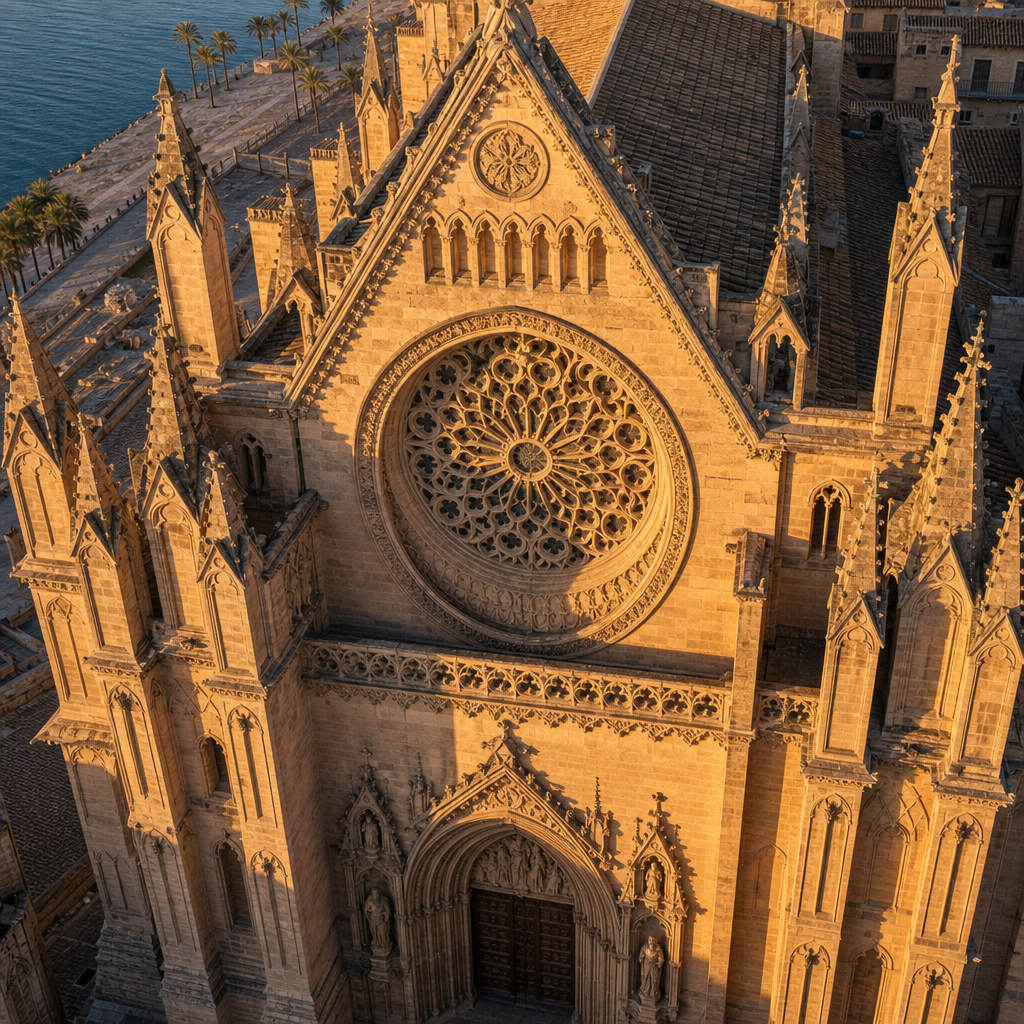
Palma's Cathedral took 400 years to complete
La Seu integrates Gothic, Renaissance, and Gaudí-modified interiors, making it a single building that spans centuries of European architectural thought.
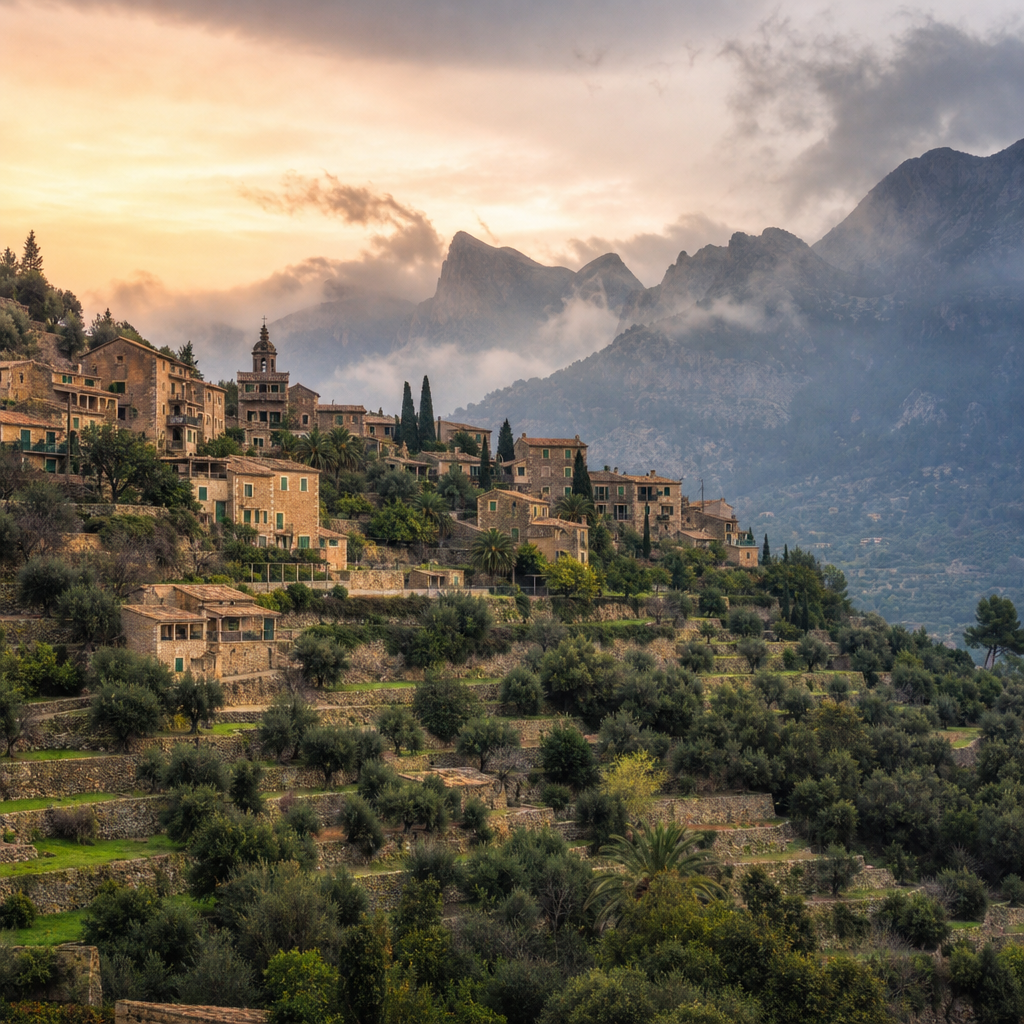
The Tramuntana mountain villages are UNESCO-listed
The Serra de Tramuntana was designated a UNESCO World Heritage Cultural Landscape in 2011, recognizing its terraced agricultural architecture and historical settlements.
Contemporary art in Mallorca is world-class, not provincial
The Fundació Miró Mallorca holds one of Europe's largest single-artist collections and draws serious collectors and curators annually.
Private access changes what is possible
Several aristocratic estates, private chapels, and working archaeological sites open only through established local contacts, not public booking platforms.
Moorish water engineering is still visible and functional
The historic acequia irrigation network, built under Islamic rule, runs through the Tramuntana and remains one of the island's most underappreciated engineering achievements.
Chopin and Sand's winter in Valldemossa shaped Romantic literature
The Real Cartuja de Valldemossa, where Frédéric Chopin composed and George Sand wrote her controversial Mallorca memoir, remains one of the island's most culturally charged sites.
Why Mallorca Culture Rewards the Serious Traveler
Mallorca is not a cultural destination by accident. It sits at the crossroads of Phoenician trade routes, Roman imperial expansion, Islamic civilization, and the Aragonese Crown, each leaving architecture, art, and civic institutions that are still physically present. The island's Mallorca cultural experiences are not reconstructed for tourists; they are woven into the daily fabric of a place that has been continuously inhabited and contested for millennia.
What makes Mallorca unusual even within Spain is the density of distinct cultural periods compressed into a relatively small geography. A single afternoon can take you from a Talayotic stone tower predating the Roman Empire to a Baroque nobleman's courtyard to a gallery showing contemporary Mallorcan painters influenced by both Miró and the Mediterranean light that has drawn artists here since the 19th century.
For the high-net-worth American traveler accustomed to curated museum experiences in New York or London, Mallorca offers something genuinely different: living heritage. The Gothic merchants' quarter in Palma is not a preservation zone. People live there, restaurants operate from medieval townhouses, and artisan workshops occupy spaces that have housed craftspeople for six centuries.
Palma de Mallorca Architecture: A City Built in Layers
Palma rewards the traveler who looks up. The city's skyline is anchored by La Seu, the Gothic cathedral that rises directly from the seafront in a piece of medieval urban theater that has no equal on the island. Construction began in 1229, continued for nearly four centuries, and was then amended in the early 20th century by Antoni Gaudí, who redesigned the interior lighting and repositioned the baldachin above the altar. The result is a building where you can read six hundred years of European aesthetic argument in a single visit.
The Gothic Quarter and the Merchant Palaces
The area around Carrer de Sant Miquel and the Plaça Major contains some of the finest Gothic civil architecture in the western Mediterranean. Mallorcan merchants of the 14th and 15th centuries built their private palaces with interior courtyards, called patis, that remain the architectural signature of the city. Several of these patios open to the public during the annual Nit dels Patios festival, but Maison Mallorca clients access them privately, at their own schedule, with an architectural historian who can explain what distinguishes a Mallorcan Gothic arcade from its Venetian or Catalan counterparts.
Modernista Palma: The Catalan Art Nouveau Moment
Between 1900 and 1930, Palma experienced its own modernista building boom, driven by the wealth of the almond and textile trades. The Gran Hotel, now housing the CaixaForum Palma art center, is the masterpiece of this period, designed by Lluís Domènech i Montaner, the same architect responsible for Barcelona's Palau de la Música Catalana. Most visitors walk past it. The intellectually curious traveler stops, goes in, and spends an hour understanding how a Mallorcan merchant elite was consciously positioning itself within a European avant-garde moment.
"Mallorca is not a place you pass through. It is a place that takes time to read, like a text written in many different hands across the same page." - Robert Graves, poet and longtime Deià resident, from his writings on the island.
Mallorca Art History Travel: From Prehistoric Sites to Modern Galleries
Serious Mallorca art history travel requires moving across time periods without treating any single era as more legitimate than another. The Talayotic culture that built the stone navetas and talayots between 1400 and 123 BCE left structures across the island that are still being excavated and interpreted. The site at Ses Paisses near Artà is among the best-preserved Bronze Age settlements in the Balearics, with a perimeter wall of stones weighing up to eight tons assembled without mortar and still standing after three millennia.
The Fundació Pilar i Joan Miró
Joan Miró spent the last thirty years of his life in Mallorca, and the foundation that bears his name in Cala Major holds more than 2,500 of his works, including paintings, sculptures, textiles, and his complete graphic work. This is not a secondary collection. The Mallorca foundation holds pieces that Miró specifically chose to keep on the island rather than send to his Barcelona foundation. For a collector or curator, the distinction matters enormously.
The foundation's studio building, the Son Boter estate, is where Miró worked daily. Walking through it with a private guide who understands both the artistic biography and the Mallorcan context in which Miró operated produces a fundamentally different experience than joining a standard tour group.
Contemporary Galleries and the Palma Art Scene
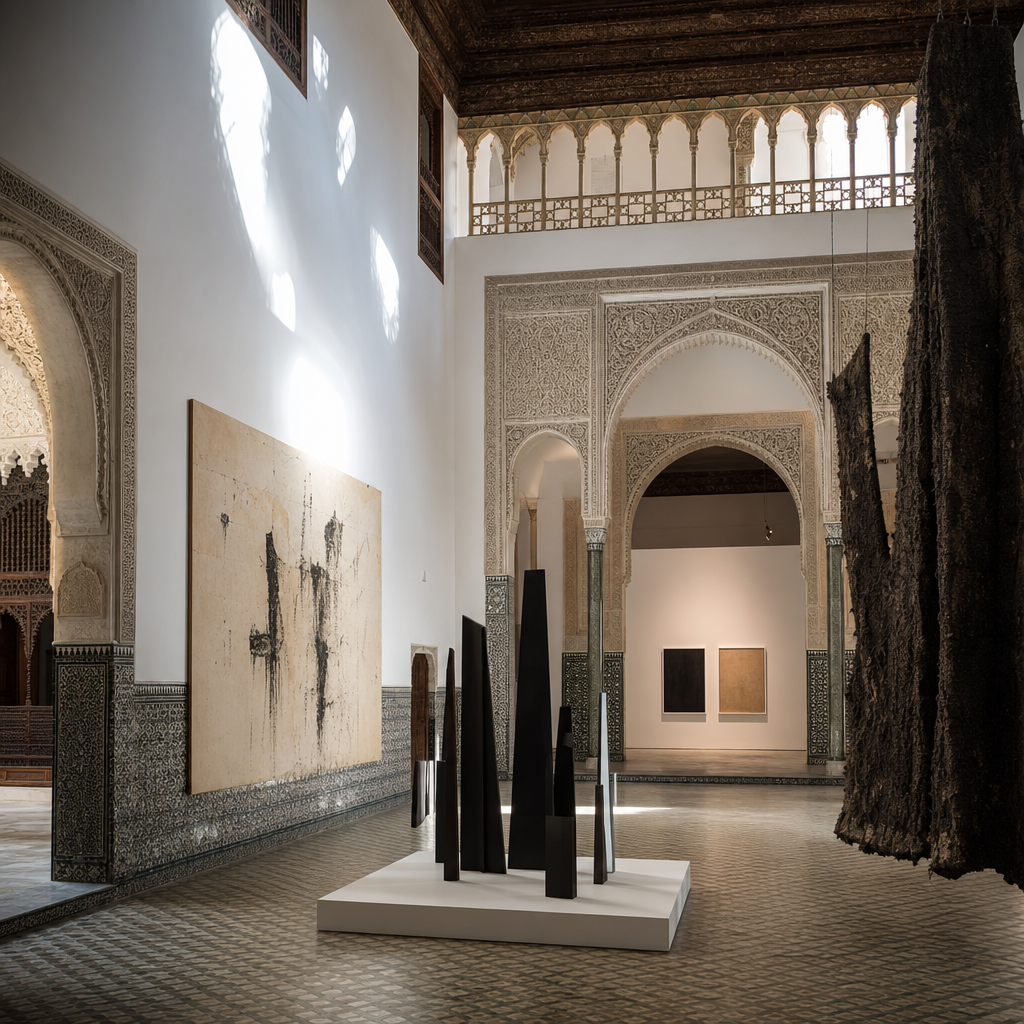
Palma's contemporary art market has grown significantly since 2015, driven partly by the arrival of second-home buyers from Northern Europe who brought collecting habits with them. Galleries like Pelaires, which has operated in a converted Baroque palace since 1965, and the Es Baluard Museu d'Art Contemporani, positioned inside a 16th-century military fortification, represent a local art ecosystem that is far more sophisticated than its geography might suggest.
Pro tip: The Es Baluard rooftop terrace, which overlooks the Palma bay and La Seu simultaneously, is one of the finest views on the island. It is best experienced in the late afternoon, after the organized tour groups leave, when you can stand there in near silence with a view that connects the contemporary art inside to the medieval skyline outside.
The Arab and Moorish Inheritance
Mallorca was under Islamic rule from 902 to 1229, a period of more than three centuries that transformed the island's agriculture, urban planning, water management, and decorative arts. The Moorish inheritance is both the most underappreciated and the most physically consequential cultural layer on the island.
The Banys Arabs and Urban Palma
The Arab Baths in Palma's old town are the most intact Moorish monument on the island, and they illustrate a key point about Mallorcan urban history: the Islamic city of Medina Mayurqa was not destroyed by the Aragonese conquest of 1229 but rather absorbed and overlaid. The street pattern of central Palma still follows the Islamic urban grid in several areas, a fact that becomes apparent when you overlay a modern map with the reconstructed Moorish city plan.
The Acequia Irrigation Network
The Arab-era water channels that feed the Tramuntana villages are a genuine engineering achievement. Built using sophisticated surveying techniques and gravity-fed distribution systems, the acequia network allowed the creation of terraced gardens and orchards across steep mountain terrain. The garden at La Granja near Esporles, a country estate open to visitors, preserves Moorish-origin water features that have been in continuous operation for nearly a thousand years.
Private Tours Mallorca: Why Independent Visits Miss the Point
The standard criticism of private tours is that they are expensive versions of what you could do independently. In Mallorca, that argument fails completely. The island's most significant cultural sites exist at three levels: what is publicly listed, what requires advance arrangement, and what is accessible only through relationships that take years to build.
A common mistake is assuming that booking the right hotels and restaurants is sufficient cultural preparation. It is not. The privately held Mallorcan noble estates, several of which date to the 13th-century Catalan settlement of the island, are not bookable through any platform. Access comes through the kind of established local network that Maison Mallorca has developed precisely because its team lives and works on the island year-round, not during tourist season only.
What Private Access Actually Delivers
In practice, private access in a Mallorcan cultural context means several specific things. It means visiting the interior of Can Olesa, one of Palma's finest Renaissance palaces, when it is not open to the general public. It means joining an active archaeological excavation at a Talayotic site with the team director explaining what they are finding in real time. It means attending a private concert in a Gothic cloister that seats forty people, with a pre-concert conversation with the performer.
These are not embellishments. They are the substance of what separates a meaningful cultural trip from a well-photographed one. Maison Mallorca's concierge team exists specifically to provide this kind of access, drawing on relationships built over years of on-island presence.
Pro tip: When planning private tours in Mallorca focused on architecture, schedule the Gothic Quarter walk for early morning before 9 a.m. The light in the narrow medieval streets is dramatically different from afternoon, and the absence of other visitors transforms the experience entirely. This is the kind of practical timing knowledge that a local specialist provides automatically.
Comparing Approaches to Mallorca Cultural Experiences
Approach
What You Get
What You Miss
Self-guided with guidebooks
Published sites, standard opening hours, surface-level context, flexibility of schedule
Private access, curatorial depth, connection to living practitioners, timing optimization, off-list sites
Group cultural tours (operator-led)
Structured itinerary, some expert commentary, cost efficiency, peer group experience
Personalization, pace control, access to non-public sites, conversation with actual specialists rather than generalist guides
Maison Mallorca private concierge curation
Access to private estates, scholar-level guides, real-time itinerary adaptation, relationships with gallerists and archaeologists, 24/7 on-island support
The lower price point of the other two options, which reflects the difference in depth of experience delivered
The Countryside: Tramuntana Villages and Hidden Heritage
The Serra de Tramuntana mountain range running along Mallorca's northwestern coast was designated a UNESCO World Heritage Cultural Landscape in 2011. The designation is for the cultural landscape, not just the natural scenery, which is an important distinction. UNESCO recognized specifically the terraced agricultural system, the network of dry-stone walls, the historic village settlements, and the water management infrastructure as an integrated human achievement of outstanding universal value.
Deià and the Literary Inheritance
The village of Deià, built into a hillside above the Mediterranean, has attracted artists and writers since the early 20th century. Robert Graves, the British poet and novelist who wrote I, Claudius there, lived in Deià from 1929 until his death in 1985 with a short wartime interruption. His house, Ca n'Alluny, is now a museum that preserves his library, his manuscripts, and his garden with exceptional fidelity. For the literary traveler, it is one of the most intimate writer's house museums in Europe, far less visited than equivalent sites in England or France.
Valldemossa and the Romantic Moment
The Real Cartuja de Valldemossa, a former Carthusian monastery, is where Frédéric Chopin and George Sand spent the winter of 1838 to 1839. Sand's subsequent book, A Winter in Majorca, is a bracingly honest and frequently hostile account of island life that the Mallorcans did not appreciate at the time and have only partially forgiven since. Chopin composed his Raindrop Prelude there. The cells they occupied are preserved with their original furniture and Chopin's personal piano.
The intellectually curious traveler will find that reading Sand's book before arriving in Valldemossa changes the experience of the monastery completely. The tension between Sand's outsider gaze and the island's self-image is a cultural conversation that is still alive in how Mallorcans relate to foreign visitors who arrive with preconceptions about what the island is.
Sineu and the Market Town Tradition
Sineu, in the center of the island, holds the oldest market in Mallorca, established by royal charter in the 13th century and still operating every Wednesday. The town also contains the church of Santa Maria de Sineu, one of the finest Gothic rural churches on the island, and the former royal palace of the Aragonese kings, now a convent. These three elements together represent a remarkably complete picture of medieval Mallorcan civic and religious life concentrated in a single small town that most resort-focused visitors never reach.
Frequently Asked Questions
What are the most important Mallorca cultural experiences for a first-time visitor focused on history?
Start with La Seu Cathedral and the adjacent Palau de l'Almudaina in Palma, then move to the Arab Baths and the Gothic merchants' quarter. For prehistoric history, Ses Paisses near Artà is essential. The Fundació Miró Mallorca covers the modern period comprehensively. For the Tramuntana, Ca n'Alluny in Deià and the Real Cartuja in Valldemossa are both genuinely moving rather than merely notable. A structured sequence matters because each period contextualizes the next.
How does Mallorca art history travel compare to visiting mainland Spain?
Mainland Spain offers greater volume, but Mallorca offers unusual density and coherence. The island's compact geography means that an intellectually focused traveler can move across three thousand years of art history in a few days without the logistical overhead of traveling between cities. The concentration of Miró's work in Mallorca specifically is a stronger case for visiting the island than any comparable single-artist argument for Barcelona or Madrid.
What makes private tours in Mallorca worth the premium over standard options?
The sites that matter most in Mallorca are not all publicly accessible on a standard timetable. Several significant private estates, working archaeological sites, and contemporary artist studios are reachable only through relationships rather than booking platforms. A private tour with genuine local connections delivers a qualitatively different experience, not simply a more comfortable version of the same one. The premium reflects real access that is otherwise unavailable, not merely upgraded transportation or preferred seating.
Is the UNESCO Tramuntana designation relevant to a cultural visit, or is it primarily for hikers?
The UNESCO designation is explicitly for the cultural landscape, which includes the dry-stone terrace architecture, the village settlements, the historic water channels, and the agricultural systems. It is highly relevant to the culturally focused visitor. The mountains themselves are spectacular, but the human achievement recognized by UNESCO is architectural and agricultural rather than geological. A visit to the Tramuntana that engages with the terracing and the village structures is a genuinely different experience from a hiking trip through the same geography.
When is the best time of year for Mallorca cultural experiences?
April through June and September through November are optimal. Summer crowds at major sites like La Seu and the Fundació Miró are substantial, and the heat reduces the quality of outdoor architectural exploration. The shoulder months offer dramatically better conditions for walking the Gothic quarter, visiting Tramuntana villages, and engaging with gallery staff and local specialists who have more time and attention to give when the island is not at capacity. Several private cultural events and estate openings that Maison Mallorca arranges for clients also occur preferentially in these periods.
Are there contemporary Mallorcan artists whose work reflects the island's historical layers?
Yes, and this is an underreported part of the island's cultural life. Several working Mallorcan painters and sculptors are explicitly engaged with the prehistoric and Moorish heritage of the island as subject matter and formal influence. The Pelaires gallery in Palma has shown several of these artists over its six-decade history. Accessing their studios, which Maison Mallorca can arrange, provides a living conversation about how contemporary creative practice relates to the island's deep historical identity.
What has surprised you most about Mallorca's cultural depth, and which historical period do you most want to explore on your visit?