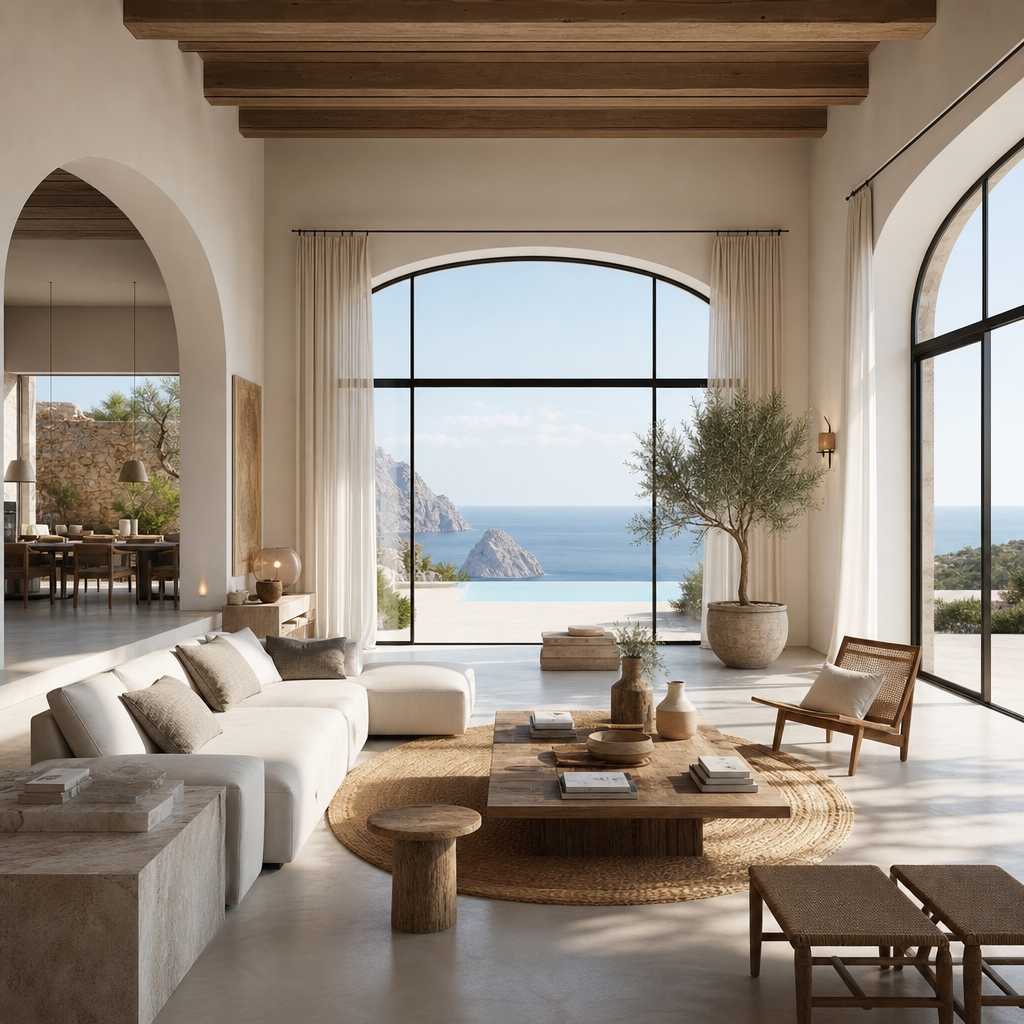
A first-timer's luxury Mallorca travel guide for Americans: where to stay, eat, and explore with expert advice on villas, dining, yacht charters, and more.
First-Timer's Luxury Guide to Mallorca for Americans
A first-timer's luxury Mallorca travel guide for Americans: where to stay, eat, and explore with expert advice on villas, dining, yacht charters, and more.
Insider Guide
Most American travelers flying into Palma de Mallorca for the first time expect a crowded European beach resort. What they actually find, when guided correctly, is one of the Mediterranean's most sophisticated destinations, with Michelin-starred dining, discreet ultra-luxury villas, and coastline that rivals anything in the Caribbean. The challenge is that Mallorca rewards insider knowledge. Without it, you will overpay for the wrong property, eat at tourist traps in the wrong neighborhood, and miss the island's genuinely extraordinary experiences. This Mallorca travel guide Americans actually need cuts through the noise and gives you exactly what works.
You get full sunshine, lower villa rates than peak July, and restaurants that are fully staffed but not overwhelmed. Avoid August if exclusivity matters to you.
Southwest Mallorca is the luxury heartland
The area around Port Andratx, Camp de Mar, and the Serra de Tramuntana offers the highest concentration of premium villas, fewer crowds, and the island's best scenery.
Private villas outperform hotels for groups of four or more
A staffed villa with a pool and chef typically delivers more privacy, space, and personalization than any five-star hotel on the island at comparable price points.
Restaurant reservations require serious lead time
Top tables at restaurants like Zaranda (two Michelin stars) or Marc Fosh fill weeks in advance during high season. Book before you arrive, not after.
A private yacht charter changes the entire trip
Mallorca's most spectacular coves, including Cala Llombards and Sa Calobra, are either inaccessible or dramatically better experienced by sea. A half-day charter costs from around $1,200.
Palma's Old Town is not just a day trip
The historic center has genuine Michelin-starred dining, world-class art at Es Baluard, and boutique hotels inside 16th-century palaces. It deserves at least two full evenings.
Generalist travel agencies consistently underdeliver here
Mallorca's luxury inventory is largely off-market. The best villas, exclusive restaurant bookings, and private experiences require local relationships that no online booking platform can replicate.
Why Mallorca Works for American Luxury Travelers
Mallorca is the largest of Spain's Balearic Islands, sitting in the western Mediterranean roughly 200 kilometers from the Spanish mainland. For American travelers, the flight logistics are more straightforward than most European destinations. Direct flights from New York to Palma operate seasonally, and connections through Madrid, Barcelona, or London add only a few hours to total travel time.
The practical advantages compound quickly. English is widely spoken in the luxury sector. The euro makes pricing transparent and often favorable compared to comparable Caribbean or Italian alternatives. Spain's VAT refund system applies to qualifying purchases. And Mallorca's infrastructure, particularly its roads, medical facilities, and private aviation access at Son Sant Joan Airport, is genuinely first-world.
What separates Mallorca from the generic luxury beach destination is range. Within a single trip, you can eat at a two-Michelin-star restaurant, spend the next morning hiking the Serra de Tramuntana (a UNESCO World Heritage Site), take a private catamaran to a secluded cove in the afternoon, and end the day at a wine estate in Binissalem. That kind of variety, compressed into a geography you can drive across in ninety minutes, is rare.
"Mallorca consistently ranks among Europe's top luxury travel destinations, with the island receiving over 13 million visitors annually while its premium segment continues to grow faster than the overall market." - Statista European Tourism Report, 2023
American travelers in the high-net-worth segment increasingly prefer destinations that combine natural beauty with genuine cultural depth. Mallorca delivers both. The island has a distinct Mallorcan identity, its own language (Catalan), centuries of Arab and Moorish architectural influence, and a culinary tradition built on ingredients most Americans have never encountered in their proper context.
When to Go: The Honest Seasonal Breakdown
The standard advice tells you to go in summer. In practice, July and especially August are the worst months to visit Mallorca if your priorities are privacy, exclusivity, and seamless service. The island's population of roughly 900,000 swells to over 1.5 million during peak summer, and the infrastructure feels it.
May and Early June: The Expert Choice
May is objectively the best month to visit Mallorca for the first time on a luxury itinerary. Sea temperatures are comfortable for swimming (around 20 degrees Celsius), almond and citrus blossoms are still visible in the countryside, and the island operates at full capacity without the gridlock of high summer. Villa rates in May run approximately 20 to 30 percent below July peaks. Restaurant availability is genuinely good. Yacht charter operators are responsive and flexible.
Early June adds warmth without yet tipping into the August crowds. The Balearic government's official tourism data shows that hotel occupancy in June sits around 85 percent, compared to over 95 percent in August. That gap matters enormously in terms of service quality at every level.
September and Early October: The Overlooked Window
September is the second-best choice and often the first choice for families with school-age children who cannot travel in May. The sea is at its warmest, having absorbed an entire summer of sun (typically 25 to 26 degrees Celsius), the crowds have thinned noticeably after the European school holidays end, and restaurants are still fully operational before the October wind-down.
October itself can be beautiful, particularly for cultural tourism and golf. Many of Mallorca's top golf courses, including Golf de Andratx and Alcanada, are at their best without summer heat stress. However, some luxury villas and yacht operators begin closing after mid-October, so verify availability carefully.
Pro tip: If you want Mallorca's best weather, best availability, and best rates simultaneously, book a May departure at least four to five months in advance. That window closes fast for premium villa inventory.
Where to Stay: Mallorca Luxury Regions Compared
Mallorca is divided into distinct zones that feel like different destinations. Choosing the wrong base ruins the trip, because driving across the island every day defeats the purpose of having a private villa. Here is what each area actually delivers.
Southwest Mallorca: Port Andratx and Camp de Mar
This is the island's premium residential and villa belt. Port Andratx is a natural harbor ringed by hillside estates, with a small marina where superyachts sit alongside local fishing boats. The scenery is dramatic, the restaurants in the village punch above their weight, and the area offers quick access to the UNESCO Serra de Tramuntana mountain range. If you are staying in a luxury villa for a week or more, this is the most defensible base on the island.
The Tramuntana Coast: Deia, Soller, and Valldemossa
The northwest coast is where the island's artistic and literary identity concentrates. Deia, a small village clinging to the mountainside above a rocky cove, has drawn creative figures since Robert Graves settled there in 1929. La Residencia hotel in Deia remains one of the Mediterranean's finest properties. This area suits travelers who want cultural depth alongside natural beauty. It is not ideal for families prioritizing beach access, as the coastline here is rugged rather than sandy.
Palma and the Bay of Palma
Palma is the island's capital and an underrated luxury destination in its own right. The Old Town contains Gothic architecture, contemporary art galleries, and several genuinely excellent restaurants. The waterfront promenade offers easy access to beach clubs. Staying in Palma makes sense for shorter trips (three to four nights) or for travelers who want urban amenities alongside day trips into the countryside. The Puro Hotel and the Cap Rocat fortress hotel nearby represent very different but equally compelling expressions of Palma-area luxury.
Northeast Mallorca: Alcudia and Cap de Formentor
The northeast is less talked about in luxury circles but deserves attention. Cap de Formentor, the dramatic peninsula at the island's northern tip, offers some of Mallorca's most spectacular scenery. The historic Formentor hotel, recently refurbished to a high standard, anchors this area. Alcudia has a well-preserved medieval old town and access to the island's longest natural beach. The northeast suits travelers who want seclusion and are willing to drive further for restaurants.
The Mallorca Villa vs. Hotel Question
This question has a clear answer for most American luxury travelers: the private villa wins, with specific exceptions. Here is the logic.
A staffed villa in Mallorca, meaning a property with a housekeeper, pool service, and access to a private chef, provides a level of flexibility and privacy that no hotel can match. You set the schedule. Breakfast happens when you want it. The pool is yours. The wine cellar is stocked to your preferences before arrival. For couples and especially for groups traveling together, the per-person economics typically favor the villa at any price point above roughly $1,500 per night total.
The exceptions are meaningful. Solo travelers, business travelers with limited time, and first-timers who want concierge services built in by default may find a five-star hotel easier to manage. Hotels like Son Brull in the north, Belmond La Residencia in Deia, or the recently renovated Grand Hotel Son Net also offer something a private villa cannot: a sense of place created by the property itself, with staff, art, and atmosphere that a rented villa rarely replicates.
In practice, the highest-value approach for a first-time luxury Mallorca vacation is a private villa with a curated concierge service layered on top. That combination, which is exactly what Maison Mallorca structures for clients, gives you the privacy and space of a villa with the expert local access of a full-service hotel.
Pro tip: When comparing villa listings, always ask whether the quoted price includes the housekeeper and pool maintenance. Many villa rental platforms list base prices that exclude these essentials, which are non-negotiable for a genuine luxury experience. The difference can be $300 to $600 per day in added costs.
Where to Eat: Mallorca Fine Dining Worth Your Time
Mallorca's dining scene has matured dramatically over the past decade. The island now holds multiple Michelin stars and produces some of Spain's most interesting wine. But the tourist infrastructure has also created an enormous number of mediocre restaurants charging premium prices. Separating the two requires specific knowledge.
The Michelin-Starred Tier
Zaranda, located inside the Es Recó de Randa hotel in the interior of the island, holds two Michelin stars and represents the apex of Mallorcan fine dining. Chef Fernando Pérez Arellano's tasting menus are rooted in local ingredients but executed with genuine creativity. Reservations are essential and should be made weeks in advance during high season.
Marc Fosh in Palma holds one Michelin star and offers a more accessible entry point into the island's serious dining culture. The fixed lunch menu is one of the Mediterranean's best value-to-quality ratios in the luxury segment. Adrián Quetglas, also in Palma, holds one star and delivers a more contemporary Spanish-European style.
The Restaurants Locals Actually Recommend
Below the Michelin tier, several restaurants consistently deliver exceptional meals. Béns d'Avall, perched on the cliffs above Soller, serves refined Mallorcan seafood with a view that justifies the winding mountain drive. Es Molí d'en Bou in Sa Coma is another starred restaurant that locals regard highly for its commitment to island produce.
A common mistake American visitors make is sticking to Port Andratx or Palma for every meal. The island's interior villages, particularly Sineu, Pollensa, and Arta, have family-run restaurants that serve traditional Mallorcan food, roasted suckling pig, tumbet (a layered vegetable dish), and sobrasada (a soft cured sausage), at a quality and authenticity level that the coastal scene cannot match.
The Wine Factor
Mallorca's Binissalem DO and Pla i Llevant DO produce wines that are largely unknown outside Spain. The island's indigenous grape varieties, particularly Manto Negro and Callet for reds, and Prensal Blanc for whites, deliver flavors with no real equivalent elsewhere. Visiting a Binissalem estate like Bodegas Jaume Mesquida or José L. Ferrer is worth building into your itinerary explicitly, not treating as an afterthought.
Experiences That Define a First-Time Luxury Mallorca Vacation
Beyond accommodation and dining, the experiences you choose determine whether a first-time Mallorca trip reaches its potential. These are the ones that consistently distinguish a well-curated trip from a generic one.
Private Yacht Charter
Mallorca has over 550 kilometers of coastline, and a significant portion of the most spectacular coves are either accessible only by sea or dramatically better from the water. A private yacht charter, ranging from a classic wooden llaut to a modern sailing catamaran, gives you access to Cala Deià, Cala Tuent, and the dramatic cliffs of Sa Calobra without the crowds that arrive overland. A half-day charter on a quality vessel starts around $1,200. A full-day, fully crewed experience on a sailing yacht runs $3,000 to $6,000 depending on the vessel. The investment is justified by what it unlocks.
Serra de Tramuntana: Private Guided Exploration
The mountain range running along Mallorca's northwest coast was designated a UNESCO World Heritage Cultural Landscape in 2011. A private guide transforms this from a scenic drive into a genuine cultural experience, connecting the landscape to its Arab irrigation systems, medieval terracing, and 18th-century pilgrimage routes. Walking the section between Deia and Soller along the old mule path takes about two hours and ends in one of the island's most charming towns.
Golf on the Island's Premier Courses
Mallorca has over twenty golf courses, several of which rank among Spain's best. Golf de Andratx in the southwest is consistently rated among the top ten courses in Spain by Spanish golf associations, with dramatic elevation changes and mountain views. Alcanada, near Alcudia in the northeast, occupies a coastal headland with views across to the lighthouse island for which it is named. Both courses require booking well in advance during peak season and benefit from local connections for preferred tee times.
Spa and Wellness Experiences
Several of Mallorca's premium properties have world-class spa facilities. The Six Senses Ibiza, while technically on a neighboring island, has established a benchmark that Mallorca properties are actively competing with. On the island itself, the spa at Belmond La Residencia in Deia and the wellness facilities at Park Hyatt Mallorca are consistently excellent. For villa-staying guests, in-villa spa treatments, from deep tissue massage to curated wellness programs, can be arranged through a concierge service and represent the most private option available.
Comparison: Booking Approaches for Luxury Mallorca Travelers
Booking Approach
What It Delivers
Where It Falls Short
Online villa platforms (Airbnb Luxe, VRBO, HomeAway)
Wide inventory, transparent pricing, user reviews for basic due diligence
No local vetting, no restaurant access, no experience curation, properties often overrepresented in listing photos, no on-island support when problems arise
Generic luxury travel agency (non-specialist)
Brand familiarity, some concierge services, hotel loyalty program connections
Mallorca is not their core market, so villa recommendations are often based on commission structures rather than genuine local knowledge, limited off-market access
Mallorca-specialist luxury concierge (e.g., Maison Mallorca)
Curated villa selection based on your specific group and preferences, pre-booked restaurant reservations, private yacht and experience coordination, 24/7 on-island support, relationships that unlock inventory and access not publicly available
Higher planning investment upfront, requires sharing detailed preferences, not suited for travelers who prefer fully self-directed itineraries
The comparison above reflects a pattern that shows up consistently in how American travelers describe their Mallorca experiences. Those who used a specialist concierge report substantially fewer logistical problems and significantly higher satisfaction with restaurant and experience quality. The difference is not primarily about budget. It is about local relationships and knowledge that cannot be replicated through an algorithm.
Practical Logistics Every American Gets Wrong
Even experienced luxury travelers make specific, avoidable mistakes when visiting Mallorca for the first time. These are the ones that come up most often.
Car Rental and Driving
Renting a car is not optional if you are staying outside Palma. The island's public transport network is minimal and does not serve most luxury villa areas. However, American travelers frequently underestimate Mallorca's mountain roads. The routes through the Serra de Tramuntana are narrow, winding, and require genuine concentration. Renting a smaller European vehicle rather than a large American-style SUV is strongly advisable. Local car rental companies at Palma Airport often have better availability and more flexible terms than the major international chains during peak season.
Currency and Tipping
Spain uses the euro, and American credit cards with chip-and-PIN functionality work reliably throughout the island. Contactless payment is widely accepted. Tipping culture in Spain differs significantly from the United States. In restaurants, rounding up or leaving 5 to 10 percent is considered generous. Tipping 20 percent, as American visitors often do, is unusual but not offensive. For private chefs, yacht crew, and concierge staff, more substantial gratuities are appropriate and expected.
Communication and SIM Cards
US mobile plans with international roaming work in Spain, but data costs can be significant. Purchasing a Spanish SIM card at the airport (Vodafone and Movistar both have kiosks) for around 20 euros gives you unlimited data for a standard one or two-week trip. This matters practically because navigation apps and restaurant booking platforms are how you will operate day-to-day.
Arriving by Private Aviation
Palma de Mallorca Airport (PMI) handles both commercial and private aviation. The private terminal, FBO services, and customs facilities for arriving private jets are smooth and efficient by European standards. If you are arriving on a charter or private aircraft, your concierge service should pre-coordinate ground transportation, because the distance between the private terminal and the commercial arrivals area means standard taxi queues are irrelevant to you.
Pro tip: Book your villa's private chef at least three weeks before arrival and provide detailed dietary preferences. The best private chefs on the island work with specific local producers and fishermen, and getting access to the best seasonal ingredients requires advance planning on their end, not just yours.
Frequently Asked Questions
How many days do you need for a first luxury trip to Mallorca?
Seven to ten nights is the right target for a first visit. Fewer than seven nights means you will spend a disproportionate amount of time in transit and adjusting to the island's rhythm rather than experiencing it fully. Ten nights allows a proper balance of beach days, cultural exploration, fine dining, and day trips without feeling rushed. Anything over two weeks works best when structured around a combination of villa bases rather than staying in one location throughout.
Is Mallorca worth visiting compared to other Mediterranean luxury destinations like Sardinia or the Amalfi Coast?
Mallorca compares very favorably. It offers better road infrastructure than the Amalfi Coast (which is notoriously difficult to navigate by car), less overtourism than Capri or Positano, more varied landscapes than Ibiza, and a more developed luxury villa market than many parts of Sardinia. The island also benefits from a longer luxury tourism tradition, which means its restaurant scene and service culture are more consistently calibrated to high-end expectations.
What is the best area of Mallorca for a luxury villa rental?
Southwest Mallorca, specifically the area spanning Port Andratx, Camp de Mar, and the lower slopes of the Serra de Tramuntana, offers the best combination of scenery, privacy, and proximity to the island's best dining and experiences. For travelers who prioritize cultural depth over beach access, the Deia and Soller area in the northwest is the strongest alternative. Avoid the east coast (Cala d'Or and Porto Petro area) if your priority is exclusivity, as that zone skews toward package tourism.
Do I need a travel concierge for Mallorca, or can I plan the trip myself?
You can technically plan a Mallorca trip independently, and many people do. The honest answer is that the ceiling of what you can access independently is noticeably lower than what a specialist concierge can unlock. The best villa properties, the most in-demand restaurant reservations, the most experienced private yacht captains, and the experiences that are not listed on any platform are accessed through local relationships built over years. If your priority is a seamless, high-quality first visit with no planning friction, a specialist like Maison Mallorca is not a luxury add-on. It is the mechanism that makes the trip work at the level you are expecting.
What budget should American travelers plan for a luxury week in Mallorca?
A realistic budget for a week in Mallorca at a genuine luxury level runs from approximately $15,000 to $40,000 for a couple, excluding flights. That range covers a staffed premium villa ($2,500 to $5,000 per night), a private chef for several dinners, one or two yacht charter days, Michelin-starred dining on multiple evenings, wine tastings, spa services, and ground transportation. Groups of four to six traveling together can achieve considerably better per-person economics, since villa costs are shared but the experience scales up rather than down.
When is Mallorca too crowded for a luxury vacation?
August is the month to avoid, specifically the two weeks surrounding the Spanish national holiday of August 15 (Assumption Day). The island is at maximum capacity, road congestion is severe, restaurant waitlists become genuinely unmanageable, and villa rates peak. If August is your only option due to family scheduling, book at least six months in advance and accept that your itinerary will need to account for crowds in a way that May or September simply does not require.
Have you visited Mallorca before, or are you planning a first trip? Share what questions you still have in the comments and we will give you a straight answer.