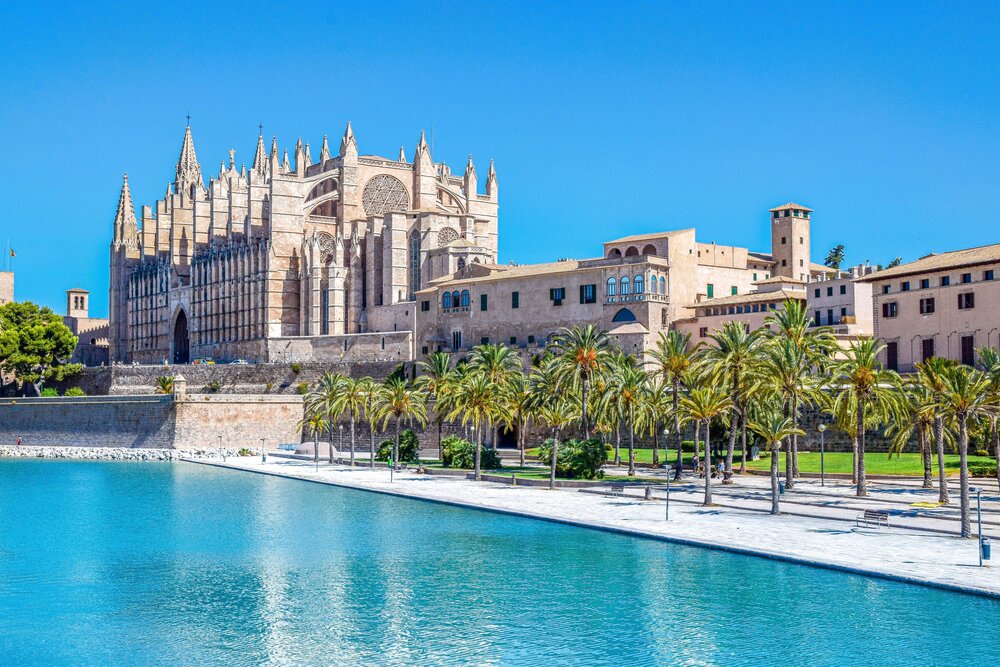
Palma’s Old Town has become one of Europe’s most compelling places to stay in a historic palace. The appeal is not scale. It is the chance to sleep behind centuries-old stone, then walk to dinner, galleries and La Seu without needing a car.
The shift is part of a wider effort to make the city’s heritage accessible. Fomento del Turismo de Mallorca notes that Palma’s historic palaces and manor houses are being restored and opened to visitors, and cites 43 boutique and “palacio” hotels in the Old Town. For American travelers who prefer privacy and character to a large resort, that is a distinctive hotel landscape.
Quick takeaways
- A palacete is a small urban palace or grand townhouse, not necessarily a royal residence.
- Historic architecture and modern amenities vary substantially from hotel to hotel; confirm the details that matter to you.
- Can Cera has two MICHELIN Keys. Can Bordoy, Convent de la Missió and Nobis Hotel Palma each have one.
- A palace-hotel address does not guarantee a parking space, a rooftop pool or a restaurant reservation.
- Autumn is an excellent time to explore Palma, but it is not an empty city. Arrange key logistics in advance.
10 things to know before booking a palace hotel in Palma
1. A palacete is about the building’s history, not a standard hotel category
In Palma, the word usually points to a substantial historic townhouse or urban palace, often associated with aristocratic or wealthy families. It may feature a central courtyard, stone arches, a grand stairway or original architectural details. The precise mix depends on the building and its restoration.
That distinction matters. A palace conversion preserves a sense of place that a new-build hotel cannot reproduce, but old footprints can bring smaller lifts, unusual room layouts or varied views. If you need step-free access, a particular bed configuration or extra space for children, ask for those specifics before booking.
2. The restoration is the point, not a reason to assume every room is alike
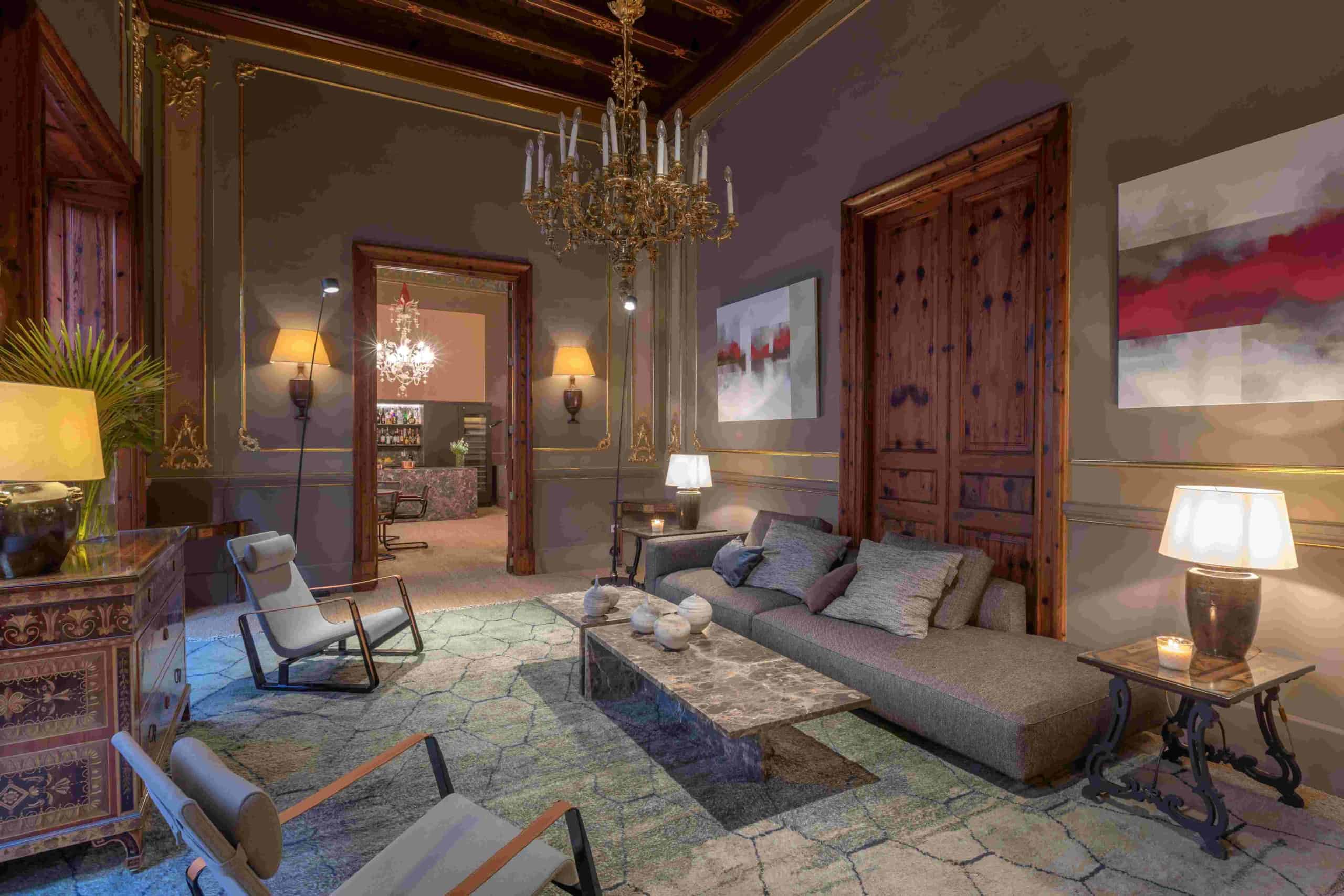
A careful renovation balances original materials with contemporary comfort. At Can Bordoy Grand House & Garden, for example, historic architecture sits alongside modern hospitality; the hotel’s accommodation gallery shows how rooms and suites differ in size and outlook.
At Nobis Hotel Palma, contemporary Scandinavian design is set within the medieval Can Oliver building. MICHELIN Guide’s hotel profile describes the property as a 37-room hotel inside a 12th-century palace. The result is polished but deliberately modern, not a period-room experience.
3. Room count shapes the atmosphere
A compact hotel can mean fewer guests, a more personal pace and a quieter return after dinner. It can also mean fewer room categories and limited availability. Several standout Palma properties are small: Can Cera lists 14 rooms, while Palacio Ca Sa Galesa has 12 rooms and suites. Nobis, by comparison, has 37.
For couples, a small property may be the right scale. For a family or group, the decisive question is often whether the hotel can offer connecting rooms, adjacent suites or a workable room configuration, not simply the total number of keys.
4. Gardens and rooftops are rare assets in the historic centre
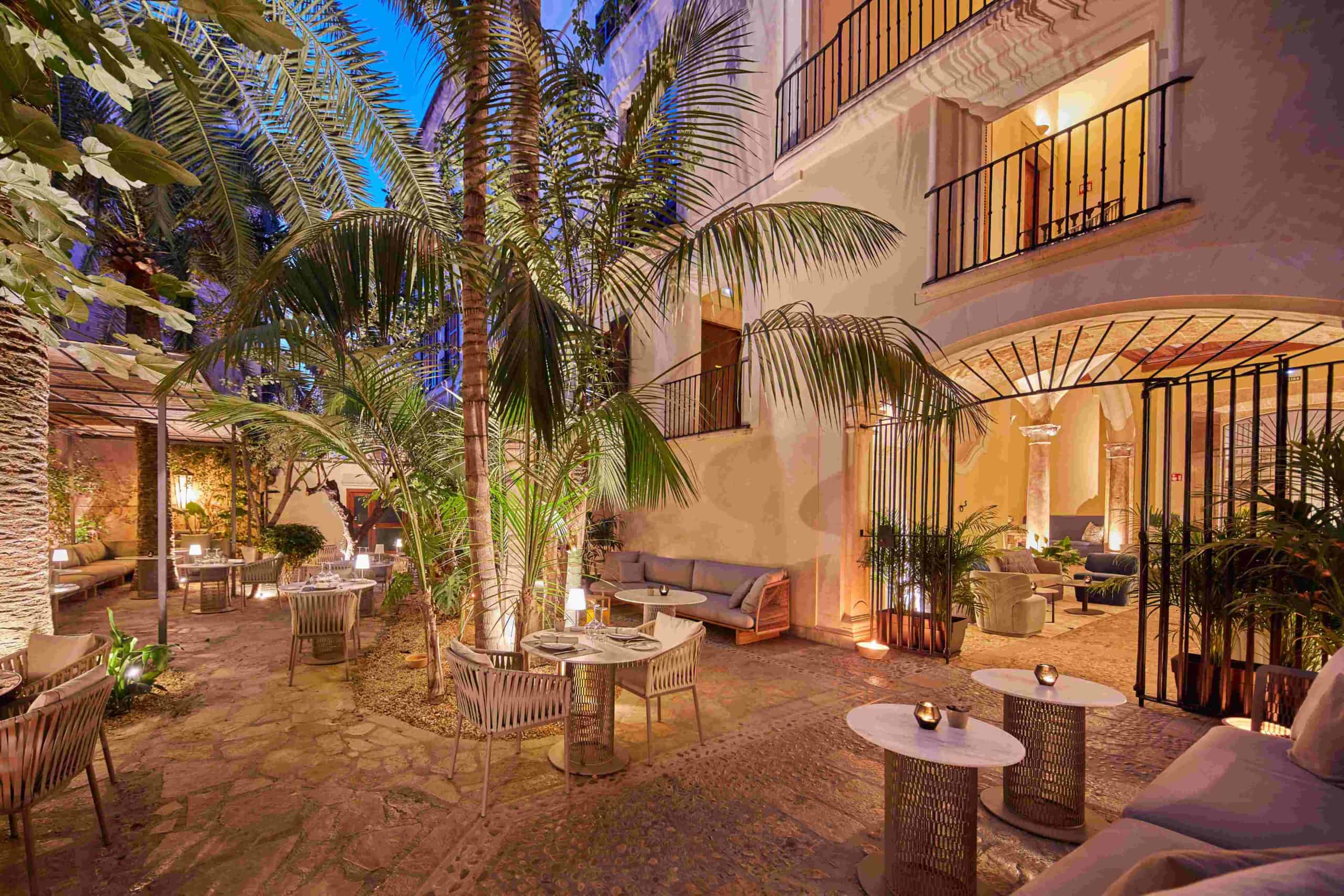
Outdoor space changes the experience of staying in the Old Town. Can Bordoy is distinguished by its walled garden and pool, a secluded contrast to its central address. Nobis offers a rooftop terrace, while Ca Sa Galesa is known for rooftop views toward the Cathedral and Palma Bay. Palacio Can Marqués adds an interior garden and courtyard to its palace setting.
Do not treat these amenities as interchangeable. A leafy garden, a rooftop lounge and a swimming pool serve different purposes. If a swim, sunbathing or a sheltered outdoor breakfast is central to your stay, confirm what is open during your dates and whether the facility is seasonal.
5. Michelin Keys rate hotels; Michelin stars rate restaurants
These are separate distinctions. In the 2026 MICHELIN Guide hotel selection, Can Cera holds Two MICHELIN Keys, while Can Bordoy, Convent de la Missió and Nobis Hotel Palma each hold One MICHELIN Key. The Keys recognize the hotel experience; they are not restaurant stars.
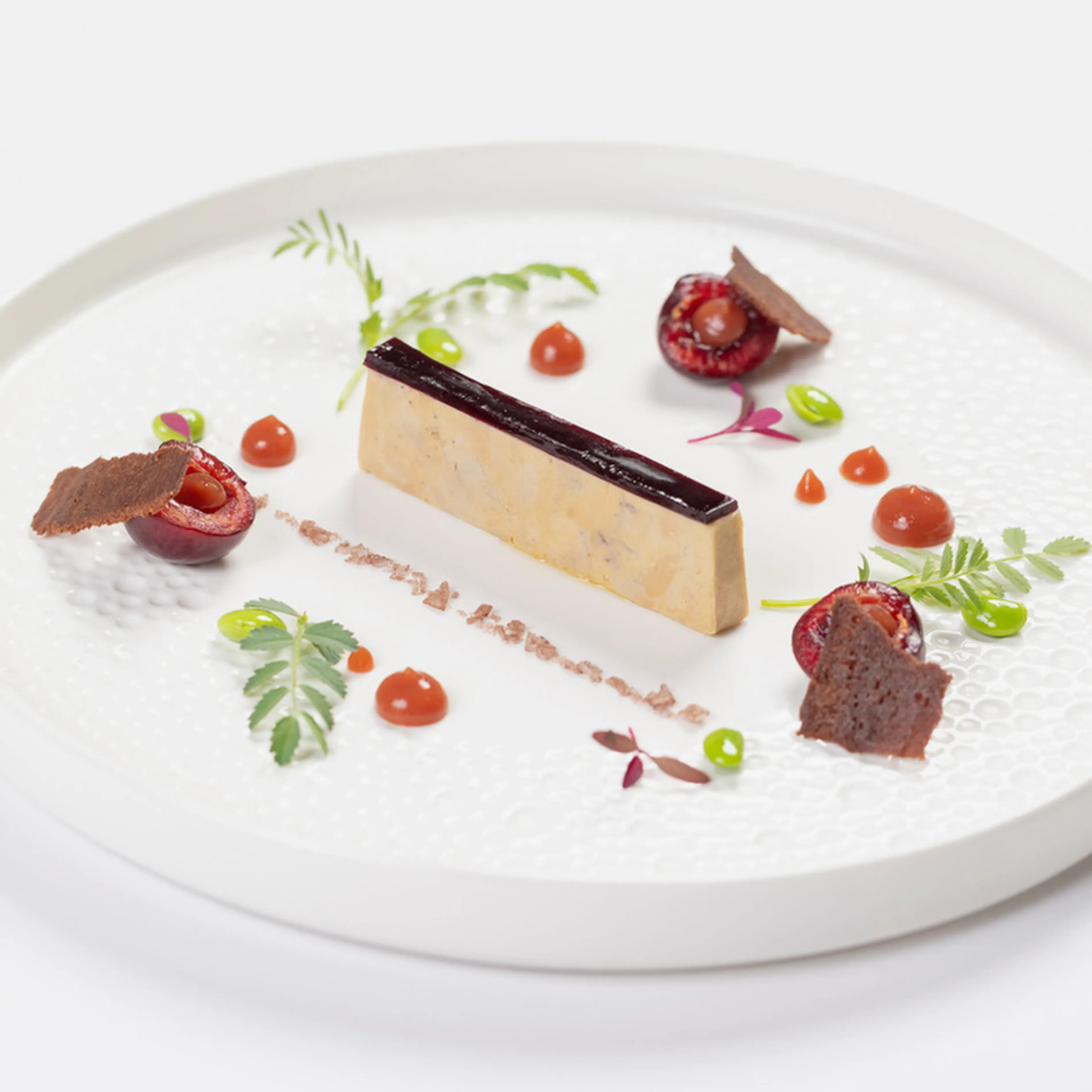
Convent de la Missió is a 17th-century former convent with a restrained contemporary interior. It also houses Marc Fosh, the Michelin-starred restaurant. Staying in the same building makes dinner especially convenient, but it does not guarantee a table. Reserve ahead, particularly for a prime evening in a busy period.
6. Old Town dining works best on foot, with reservations arranged early
Palma’s compact centre makes a palace hotel an efficient base for dinner. You can walk between historic squares, independent restaurants and contemporary dining rooms, then return without planning a cross-island transfer. The hotel’s own restaurant may be the most convenient choice; the surrounding neighbourhood offers more variety.
The practical move is to decide which meals matter before arrival. Tell your hotel or travel planner about dietary needs, preferred dining times and whether you want tasting menus or a more casual evening. For a sought-after table, convenience of location is not a substitute for a confirmed reservation.
7. Medieval streets change the arrival plan
The Old Town was not designed around modern cars. Some streets are narrow, access may be restricted and the closest vehicle drop-off may be a short walk from the hotel entrance. Do not assume a private driver can pull up directly to the door.
Before arrival, ask the hotel for its precise drop-off point, luggage procedure and nearest garage recommendation. If you are travelling with substantial luggage, children or mobility needs, share that information in advance. For most stays centred on Palma, a car can be more burden than benefit; arrange a driver for airport transfers and excursions instead.
8. Autumn offers an excellent city stay, but not a deserted one
October brings a more comfortable pace for walking Palma than the height of summer, and the city’s cultural and dining life remains active. It can also bring rain, and popular weekends still require planning. Think of autumn as a strong shoulder-season allocation: excellent for an urban stay, but not a guarantee of empty restaurants or hotel availability.
For May, September and October, begin hotel and dinner planning around 6–8 weeks ahead where possible. For summer or a particular suite, start earlier. Fomento’s guide to Palma’s palaces is a useful reminder that the city’s historic hotel scene can also work beyond the main summer season; check individual properties for any planned seasonal closures.
9. Compare the palace to your priorities, not just its photographs
| If your priority is… |
Start with… |
Why it may fit |
| Historic elegance in an intimate setting |
Can Cera |
A 14-room 17th-century palacete; Two MICHELIN Keys |
| A private garden and pool |
Can Bordoy |
A historic house with an expansive walled garden and pool |
| Quiet design and an on-site Michelin-starred restaurant |
Convent de la Missió |
A former convent with Marc Fosh in the building |
| Contemporary design and a rooftop |
Nobis Hotel Palma |
A medieval palace conversion with Swedish design and rooftop terrace |
| Palace suites and a courtyard garden |
Palacio Can Marqués |
A historic La Lonja residence with an interior garden |
| Cathedral and bay outlooks |
Palacio Ca Sa Galesa |
A restored 16th-century palace with a rooftop terrace |
The wider shortlist also includes Boutique Hotel Posada Terra Santa, Sant Francesc Hotel Singular and El Llorenç Parc de la Mar, each with one MICHELIN Key. They broaden the choice beyond palace conversions alone. A MICHELIN distinction is one useful signal, not a substitute for checking location, room type and the atmosphere you want.
10. Match the hotel to the whole trip
The best palace is the one that supports your itinerary. Choose a garden-led stay if you want quiet pauses at the hotel; prioritize a central address if your days revolve around galleries, shopping and dinner; consider a larger property if your group needs more room categories or shared amenities. If you want a private residence rather than a hotel, Palma also offers apartment and townhouse options.
Our team helps American travelers make that decision against the full brief: dates, party size, desired level of privacy, dining plans and onward island travel. Through our Palma destination guide, residence collection and planning process, we compare the options and coordinate the details that make the stay work.
A palace hotel is a distinctive way to experience Palma, but the right fit depends on more than the building’s history. For bespoke travel Mallorca planning, from a carefully matched stay to dining and transfers, start your inquiry with Maison Mallorca.