Plan your private Mallorca yacht charter with expert guidance on vessel types, costs, routes, contracts, and why concierge booking makes the difference.
Mallorca Yacht Charter: Everything to Know Before You Book
Plan your private Mallorca yacht charter with expert guidance on vessel types, costs, routes, contracts, and why concierge booking makes the difference.
Insider Guide
Most people booking a Mallorca yacht charter for the first time underestimate how quickly the details spiral: vessel type, crew qualifications, provisioning contracts, port fees, insurance riders, seasonal pricing spikes. Get one of these wrong and a dream Mediterranean week becomes a logistical headache before the anchor even drops. This guide cuts through the noise with practitioner-level detail, drawn from coordinating dozens of private charters across the Balearic Islands for American clients who have high expectations and zero tolerance for surprises.
Charter rates in Mallorca spike 30 to 50 percent during peak summer. Booking June or September delivers better value with nearly identical weather and fewer crowds at anchor.
The APA is not optional
The Advance Provisioning Allowance typically adds 25 to 35 percent on top of the base charter fee and covers fuel, food, port fees, and crew gratuity. American clients are often blindsided by this.
Gulet and catamaran offer very different experiences
Catamarans provide stability and shallow-draft access to secluded coves. Gulets offer shaded deck space and a slower pace. Neither is universally better, it depends on your party and itinerary priorities.
Spanish maritime law requires specific documentation
All charter vessels operating in Spanish waters must carry a valid Despacho de Navegacion. Verify this before signing any contract, not after.
Route flexibility is your biggest advantage
A private Mallorca yacht charter lets you anchor in bays that day-trip boats cannot access. The coves of the Tramuntana coast are accessible only to vessels that can stay overnight.
Crew quality varies enormously
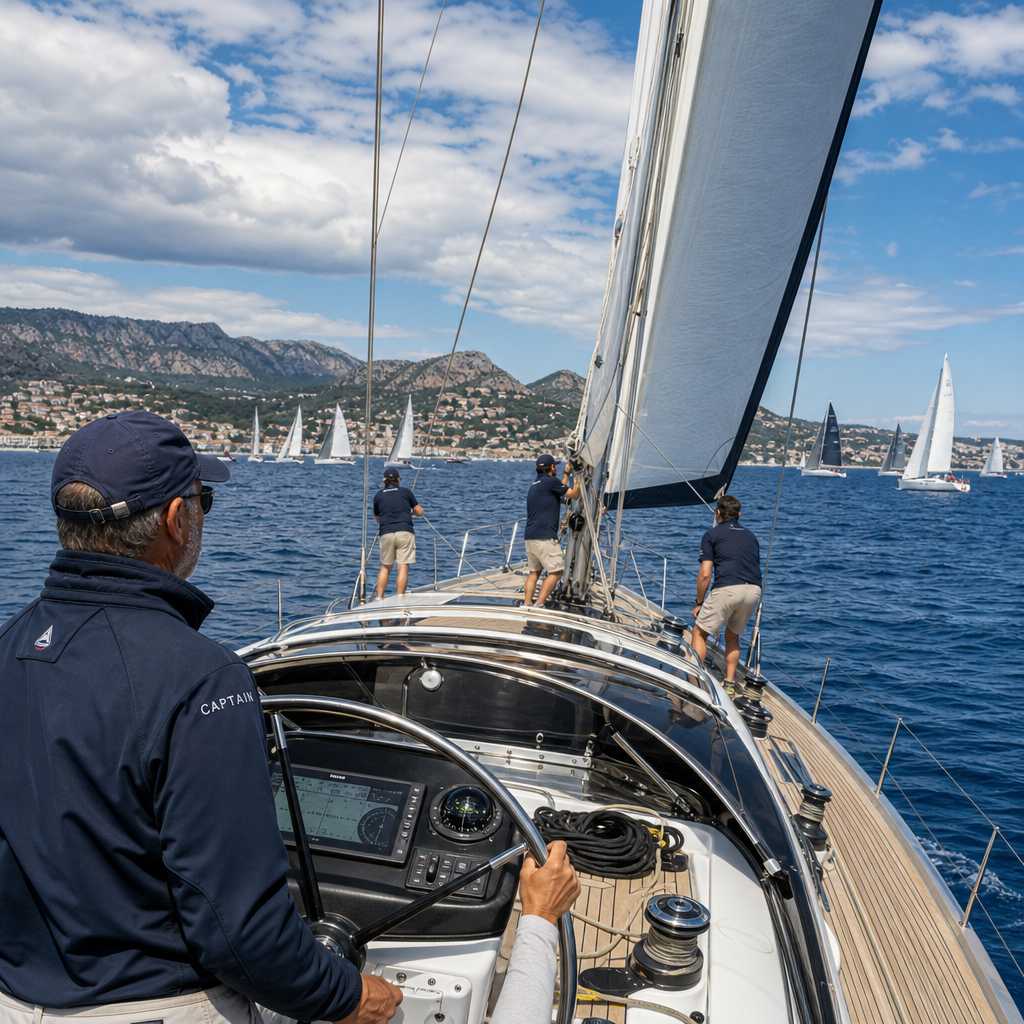
A STCW-certified captain with Balearic-specific experience is non-negotiable. Request crew CVs before booking and push back if the broker resists sharing them.
Concierge coordination saves hours
Integrating your yacht charter with villa transfers, restaurant reservations, and shore excursions requires coordination that a general travel agent simply cannot provide at the level Mallorca demands.
Why Mallorca for a Private Yacht Charter
Mallorca sits at the geographic center of the western Mediterranean, which means it punches well above its size in terms of accessible sailing variety. Within a single charter week, you can move from the dramatic limestone cliffs of the Serra de Tramuntana on the northwest coast to the turquoise shallows of Cala Mondragó on the southeast, with stops in the historic port of Palma de Mallorca in between.
The island receives over 300 days of sunshine per year, according to Spain's national meteorological agency AEMET, and the prevailing Tramuntana and Meltemi winds create consistent sailing conditions that experienced skippers rely on from May through October. This predictability is a major reason why the Balearic yacht charter market has grown steadily, with Palma's superyacht marina, Port Adriano, regularly ranking among Europe's top five luxury marinas.
For American travelers specifically, Mallorca offers a logistical advantage that Greece or Croatia cannot: it is a direct flight from major US hubs to Palma Airport, with no connecting ferry or domestic transfer required to reach your vessel. Your clients board the boat the same day they land.
Types of Vessels Available
The Mallorca charter fleet is one of the most diverse in the Mediterranean. Understanding what is actually available, and what each vessel type delivers, prevents the most common booking regrets.
Motor Yachts
Motor yachts dominate the luxury end of the Mallorca charter market, ranging from 60-foot day cruisers to 200-foot superyachts with full crew complements. Expect top speeds of 25 to 35 knots, which means you can cover more of the coastline in less time. For clients who want the yacht as a floating base for exploration rather than a sailing experience in itself, a motor yacht is the correct choice.
Weekly base rates for a quality motor yacht in the 80 to 100-foot range run from approximately EUR 35,000 to EUR 80,000 in peak season, before the APA. This is not a number to hide from your clients. Transparency on costs at the outset protects the relationship.
Sailing Yachts and Catamarans
Private sailing yachts attract clients who want the authentic Mediterranean experience: wind in the sails, quieter anchorages, lower fuel consumption. Catamarans are particularly popular with families because the dual-hull design dramatically reduces rolling motion, which matters when you have children aboard or guests prone to seasickness.
Catamarans also have a shallower draft, typically 1.2 to 1.5 meters versus 2 to 3 meters for a comparable monohull, which unlocks anchorages that larger motor yachts cannot access. Several of the most spectacular coves along Mallorca's south coast fall into this category.
Gulets and Classic Wooden Vessels
Gulets, traditional Turkish wooden motor-sailors, have become increasingly popular in the Balearics over the past decade. They offer generous shaded deck space, wide beam, and a relaxed pace that suits groups who want to linger at anchor and use the yacht as a social platform. If your clients' priority is sunbathing, dining on deck, and swimming, a gulet delivers those experiences at a more accessible price point than a comparable motor yacht.
Understanding Charter Costs
The base charter fee is the starting point, not the total cost. Every client from the American market needs this explained clearly before they commit to a budget, because the gap between base fee and all-in cost surprises people every season.
The Advance Provisioning Allowance Explained
The APA is a deposit paid to the captain before departure, typically 25 to 35 percent of the base charter fee. It is drawn down throughout the week to cover fuel, food and beverages, port and marina fees, and any other running expenses. At the end of the charter, any unspent APA is returned to you. If the crew spend more than the APA, you settle the difference at departure.
On a EUR 50,000 base charter, plan for an APA of EUR 12,500 to EUR 17,500. A heavy fuel itinerary or guests who drink premium champagne all week will push that number higher. Ask your concierge or broker to provide a realistic APA estimate based on your specific itinerary before you sign.
Crew Gratuity
Industry standard gratuity for a charter crew in the Mediterranean is 10 to 20 percent of the base charter fee, paid in cash at the end of the trip. On a EUR 50,000 charter with a crew of four, that is EUR 5,000 to EUR 10,000. This is not mandatory, but it is expected, and an experienced crew will deliver a noticeably different level of service when they know the client understands the convention.
Pro tip: Ask your charter broker to break down the APA into fuel, food, and port fees separately for your specific itinerary. This gives you real cost control and eliminates end-of-trip disputes over how the APA was spent.
VAT and Spanish Taxes
Spain charges IVA (VAT) on charter fees at a rate of 21 percent for vessels embarking and disembarking in Spanish ports. Some charter structures route through other jurisdictions to manage this, but any broker who promises complete VAT avoidance on a Spanish charter should be viewed with skepticism. Get tax treatment confirmed in writing before signing.
Charter Formats Compared
Not all Mallorca yacht charters are structured the same way. The format you choose affects pricing, flexibility, and your level of responsibility as the charterer.
Charter Format
Best For
Key Consideration
Full crewed charter (MYBA contract)
Luxury travelers who want full service with professional crew managing all operations and provisioning
Highest base cost but lowest logistical burden. The MYBA contract is the industry-standard legal framework; insist on it.
Bareboat charter
Qualified sailors who hold an offshore skipper qualification and want to self-captain
Requires proof of competency. Spanish maritime authority may require an ICC or equivalent. Lower cost but full responsibility for the vessel.
Skippered charter
Groups who want sailing without the crew overhead, or who have a captain but prefer to handle their own provisioning
Middle ground on cost. Ensure the skipper holds STCW Basic Safety Training and has documented Balearic experience.
In practice, the overwhelming majority of American clients booking through Maison Mallorca opt for fully crewed charters on MYBA contracts. The value proposition is clear: a professional crew handles everything from customs paperwork to dinner reservations ashore, which is what a genuinely luxury experience looks like.
Best Anchorages and Routes Around Mallorca
Mallorca's coastline runs approximately 555 kilometers, with over 200 beaches and coves. The following routes represent what works in practice for a 7-night charter, not what looks good on a map.
The Northwest Tramuntana Route
Starting from Palma, heading northwest along the Tramuntana coast is the most visually dramatic option. Stops at Port de Sóller, the only real harbor on the northwest coast, Cala Tuent, and Cala de Sa Calobra reward guests with scenery that no road trip can replicate. The caveat: this coastline is exposed to northern swells, and the route is weather-dependent in a way the south coast is not.
For experienced sailors and captains who know the coast, the Tramuntana route is exceptional. For first-time charter guests who prioritize stable anchorages and swimming, start with the south or east coast and save Tramuntana for a return trip.
The South and East Coast Circuit
The southern and eastern coast of Mallorca offers the most consistently turquoise water and the greatest concentration of protected coves. Cala Mondragó, Cala Llombards, and Porto Colom are genuine highlights. This is also the route that connects to the neighboring island of Cabrera, a protected national park where anchoring is permitted by advance reservation only.
Cabrera is worth planning around. The waters inside the national park are among the clearest in the western Mediterranean, and the island's near-pristine state is a direct result of restricted access. Secure the anchoring permit through your charter broker or concierge at least four weeks in advance.
Palma as Your Base
Do not underestimate the value of spending at least one night in Palma marina. The Michelin-starred restaurant scene along the Paseo Maritimo, the nightlife at venues like Tito's, and the UNESCO-listed Old Town are all within walking distance of the dock. A charter that ignores Palma entirely is leaving some of the island's best experiences untouched.
Pro tip: If your group wants both the Tramuntana drama and the southeastern coves in a single week, structure the itinerary to depart Palma westward on day one, complete the northwest circuit by day three, then return through the south. Wind patterns on the Balearics typically favor this direction of travel.
Crewed vs. Bareboat: Which Is Right for You
The honest answer, for the audience reading this guide, is that bareboat charters are almost never the right choice for the clients Maison Mallorca serves. Here is why.
A bareboat charter requires the primary charterer to hold a recognized offshore sailing qualification, carry proof of competency, and accept full legal liability for the vessel, which is typically worth EUR 300,000 to several million euros. Spanish maritime authorities have tightened documentation requirements in recent years. The cost savings relative to a crewed charter are real, roughly 40 to 60 percent lower on the base fee, but the total experience is fundamentally different.
A crewed charter on a well-run vessel means you wake up each morning and decide where you want to go and what you want to eat. The captain plots the route, the chef sources local ingredients in the next port, and the stewardess has your breakfast ready on the aft deck before you surface. That is the experience worth paying for.
"The Mediterranean charter market has matured to a point where the crew experience is as important as the vessel itself. Clients are increasingly selecting boats based on chef credentials and captain references, not just length and speed." - Camper and Nicholsons International, Yacht Charter Industry Report
What to Look for in a Charter Contract
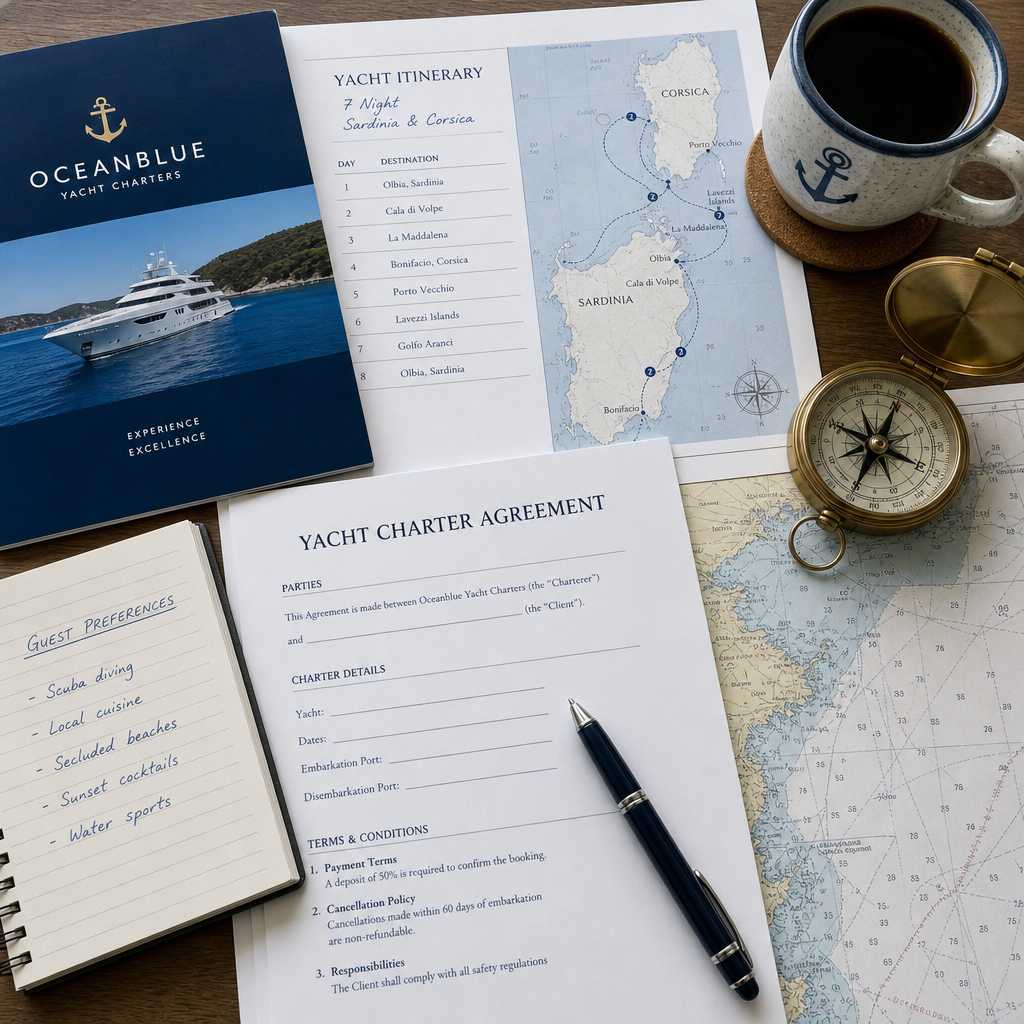
The MYBA Memorandum of Agreement is the industry standard for crewed charters in the Mediterranean. If a broker presents a contract that is not MYBA-based, ask why before proceeding. The MYBA contract framework protects both parties clearly and is what reputable brokers use.
Key clauses to review before signing include the force majeure definition, the cancellation and refund policy, which events constitute technical failure warranting a refund, and who carries liability for mechanical breakdown during the charter period. These are not hypothetical concerns. Engine issues, desalinator failures, and unexpected weather all happen in real charter seasons.
Verify that the vessel's insurance covers third-party liability to a minimum of EUR 3 million, which is the Spanish maritime legal minimum for commercial charter vessels. Request a copy of the insurance certificate directly, not just a broker's assurance that the vessel is insured.
Check the vessel's Spanish maritime documentation: the Certificado de Navegabilidad (seaworthiness certificate) should be current, and the vessel should appear in the Spanish maritime registry as a commercial charter vessel, not a private yacht being operated commercially without proper licensing. This distinction matters for your legal protection as a charterer.
Why Booking Through a Mallorca Concierge Changes Everything
A charter broker matches you with a vessel. A Mallorca concierge service like Maison Mallorca integrates the yacht charter into your entire vacation so that every component works together without you managing the logistics.
In practice, this means your villa in the Tramuntana is selected with your charter embarkation point in mind. Your restaurant reservations in Palma are timed around your marina arrival. Your private transfer from Palma Airport delivers you to the dock rather than to a hotel. The chef aboard your yacht knows your dietary preferences before you board because your concierge communicated them during the booking process.
Generalist travel agents, and frankly most charter brokers, do not operate at this level of integration. They book the yacht. They do not coordinate what happens before and after you step aboard, or how the yacht experience connects to your broader Mallorca itinerary.
Maison Mallorca's model exists specifically to serve American travelers who want expert curation without the overhead of managing multiple vendors across a foreign country and a time zone difference. The clients who benefit most from this approach are those who recognize that the planning and coordination is where the real value is created, not just in the selection of the vessel itself.
If you are comparing options and looking at villa-focused agencies in the Balearics, note that the primary differentiator with Maison Mallorca is the full-service scope: from private yacht charters to exclusive dining reservations, golf tee times, and 24/7 on-island support. That level of service is not available from a villa rental listing site.
Frequently Asked Questions
When is the best time to book a private yacht charter in Mallorca?
The best time to book is between January and March for a summer departure. Peak season vessels, particularly in the 80-foot and above range, are often fully committed by April. If you are targeting July or August, the most sought-after yachts with top crew ratings will be gone by February. June and September offer the best combination of availability, competitive pricing, and excellent weather.
How many people can a typical Mallorca yacht charter accommodate?
Most crewed charter yachts in the Mallorca market accommodate between 6 and 12 guests overnight. Spanish maritime commercial licensing caps most charter vessels at 12 passengers. Larger vessels operated as passenger ships require different licensing and significantly higher operating costs. If your group exceeds 12, the practical solution is chartering two complementary vessels that sail the same itinerary.
Do I need any sailing qualifications to charter a yacht in Mallorca?
For a fully crewed charter, no qualifications are required. The captain holds all necessary licenses. For a bareboat or skippered charter, the lead charterer must typically present an RYA Coastal Skipper certificate, an ICC (International Certificate of Competence), or an equivalent recognized offshore qualification. Spanish authorities have become more rigorous about verifying these credentials in recent years.
What is included in a fully crewed Mallorca yacht charter?
The base charter fee covers the vessel and crew for the contracted period. The APA covers all running expenses: fuel, food, beverages, port fees, and crew gratuity. What is not included is your travel to and from Mallorca, travel insurance, and any shore excursions or activities you book independently. When booked through Maison Mallorca, the charter is coordinated with all other vacation components so nothing falls through the gaps.
Can I combine a Mallorca yacht charter with a visit to Ibiza or Menorca?
Yes, and this is one of the most compelling aspects of a Balearic charter. Ibiza is approximately 90 nautical miles from Palma, reachable in a day's sailing or a few hours at motor yacht speeds. Menorca is about 85 nautical miles to the northeast. A 10 to 14-night charter that combines Mallorca with one of the other Balearic islands is a genuinely different experience from a single-island itinerary, and it makes full use of the charter vessel's range.
What happens if bad weather disrupts our itinerary?
The captain has ultimate authority over vessel safety, which means weather-driven itinerary changes are a routine part of chartering. An experienced captain with Balearic knowledge will always have alternative anchorages in reserve when a planned stop becomes untenable due to wind direction or swell. This is exactly why captain experience in this specific region matters. A captain who has only sailed Greek waters will not know the Mallorca-specific shelter options the way a local captain does.
Is a Mallorca yacht charter worth the cost compared to a luxury villa stay?
They serve different purposes, and the best answer for clients with sufficient budget is often both. A yacht charter delivers mobility, exclusivity, and access to anchorages that no land-based accommodation can replicate. A luxury villa delivers space, privacy, a fixed base for day trips, and the experience of living inside Mallorcan architecture and landscape. Many Maison Mallorca clients structure their trip as four nights in a villa followed by a mid-week charter, which maximizes the variety of the Mallorca experience within a single trip.
Have you chartered a yacht in Mallorca or the Balearic Islands before? We would genuinely like to hear what surprised you most about the experience, share your thoughts in the comments.