Quick takeaways
- Christmas Eve, 24 December 2026: The Cant de la Sibil·la is performed in churches across Mallorca. La Seu Cathedral and the Santuari de Lluc are the island’s best-known settings.
- New Year’s Eve morning, 31 December 2026: Palma’s Festa de l’Estendard commemorates the city’s history with a banner ceremony, procession, Mass and the recitation of La Colcada.
- The 2026 event schedules are not yet published. Dates are established; exact start times and service details should be checked with the Cathedral and Palma City Council closer to December.
- Plan for crowds and holiday closures. Arrive early for La Seu, arrange transport in advance and reserve festive dinners several weeks ahead.
Most Americans picture Mallorca as beaches. At Christmas and New Year, the island offers something less expected: a medieval prophecy sung by candlelight, followed a week later by a civic procession that has marked Palma’s history for more than seven centuries.
These are not staged heritage experiences. They are living ceremonies with real local significance. Understand the timing and logistics, and you can experience them with care rather than rushing in at the last minute.
Christmas Eve: the Song of the Sibyl
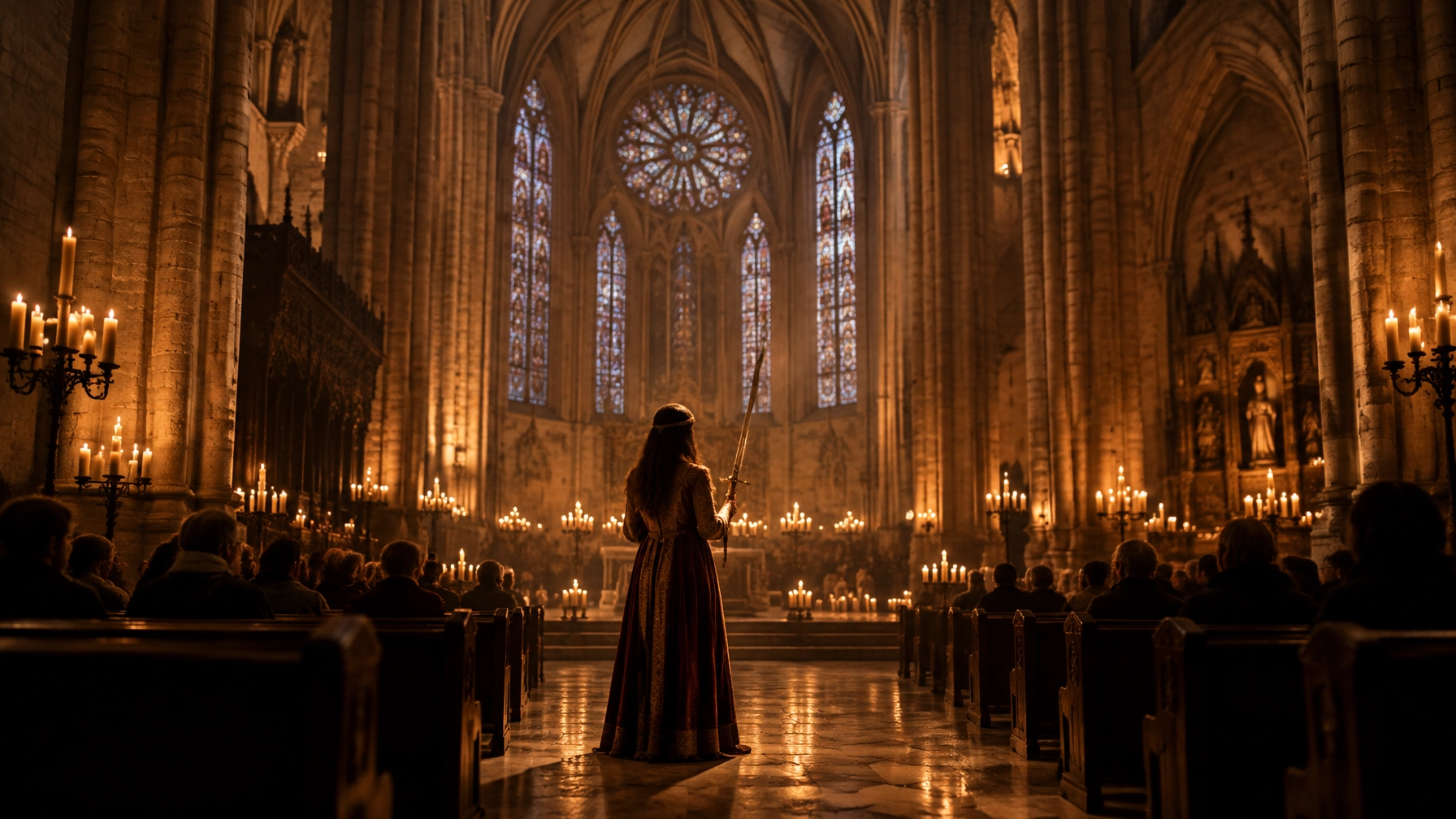
The Cant de la Sibil·la is a medieval liturgical chant traditionally performed during Christmas Eve services. The story of its arrival on Mallorca is associated with Jaume I’s conquest in 1229; the island’s earliest written record of the chant appears in a 14th-century cathedral manuscript. In 2010, UNESCO added the Mallorcan tradition to its Representative List of the Intangible Cultural Heritage of Humanity.
The performance is spare and arresting. A soloist, traditionally a boy or girl in medieval-style vestments, sings a prophecy of the Last Judgement while carrying a sword. There is no instrumental accompaniment to the chant itself; organ interludes separate the verses. The official Mallorca tourism account notes that it takes place on the night of 24 December in churches across the island.
Where to hear it
Two performances draw particular attention: Palma Cathedral, La Seu, and the Santuari de Lluc, the mountain sanctuary in the Serra de Tramuntana. La Seu gives the ceremony a striking civic and architectural scale. Lluc offers a quieter mountain setting, but reaching it requires more transport planning, especially on a holiday night.
The cathedral is the high-profile choice, and it fills early. Plan to arrive well ahead of the service; allow at least 60–90 minutes if you want time to enter and find a place without turning the evening into a scramble. The Cathedral’s published schedule for 2026 should be treated as authoritative: a prior year’s service time is not a guarantee of this year’s.
Our rule: choose the location before you book dinner. For La Seu, stay in Palma’s Old Town or arrange a driver and a clear meeting point. For Lluc, book a private transfer both ways; do not assume holiday-night taxis will be readily available for a late return.
Dress respectfully and warmly. Palma’s December daytime temperatures average around 16–17°C (61–63°F), but the evenings are colder; AEMET’s airport climate normals show average December overnight lows near 5–6°C (41–43°F). The stone interior can feel cool while you are standing for a service. AEMET climate normals are averages, not a forecast, so check conditions before travelling.
Dinner is part of the logistics
Christmas Eve is Nit de Nadal, often called Nitbona locally. Restaurants may close early, offer a set menu or operate on reduced holiday hours. Do not assume your preferred dining room will be open for a late sitting. We recommend confirming a table four to six weeks ahead, then building the service and transfer around it.
31 December: Festa de l’Estendard
The Festa de l’Estendard marks the entry of Jaume I’s troops into Palma on 31 December 1229. It is among Europe’s oldest civic commemorations and is included in Spain’s Intangible Cultural Heritage register.
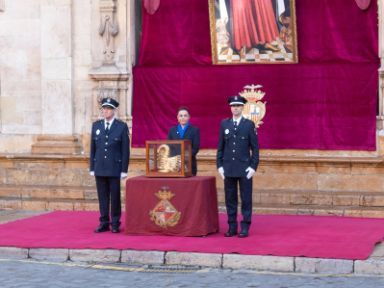
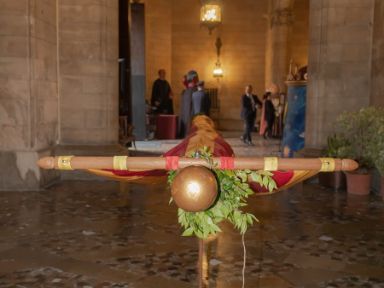
The ceremony centres on the royal banner, or estendard, at Plaça de Cort. The established programme includes the banner’s ceremonial placement, a procession to La Seu, Mass and a return to Cort, where La Colcada, a poem by Pere d’Alcàntara Penya, is recited. Folkloric groups and civic representatives form part of the procession.
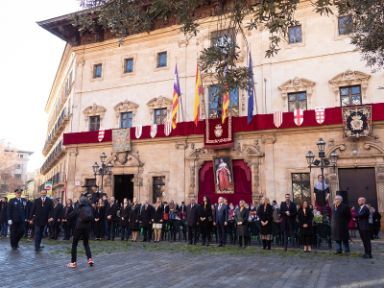
For 2026, the date is confirmed; the detailed timetable is not. At the time of writing, Palma has not published its official 2026 programme. Previous editions have placed the morning’s main events around Plaça de Cort and La Seu, but specific times and participants can change. Check the Palma City Council agenda in December before finalising your plans.
Where to stand, and what comes next
Plaça de Cort is the focal point, but the procession moves between the square and the Cathedral. Arrive early enough to choose a position and stay flexible; the route, crowd density and programme details should be confirmed once the city releases its current notice. The route is in Palma’s historic centre, so walking is usually more useful than trying to arrange a car directly beside the ceremony.
Treat the event as a morning in the Old Town, not a quick photo stop. After the ceremony, keep time for lunch and a pause before the evening’s New Year’s plans. If you want the Spanish midnight custom of eating 12 grapes with the clock’s twelve strokes, arrange your dinner and midnight location in advance rather than leaving the transition to chance.
Two traditions, one walkable festive fortnight
| Event |
Date |
Main setting |
The practical priority |
| Cant de la Sibil·la |
24 December 2026 |
La Seu or Santuari de Lluc |
Confirm service details; arrive early; secure dinner and transport |
| Festa de l’Estendard |
31 December 2026 |
Plaça de Cort and La Seu |
Check the official programme in December; arrive early and walk |
The two ceremonies frame a distinctive Palma stay: Christmas Eve at La Seu, New Year’s Eve morning at Plaça de Cort. Both take place in or near the Old Town, making a centrally located residence a meaningful advantage, not simply a convenience. Browse our Palma destination notes for a sense of the neighbourhoods and accommodation styles that work best.
Logistics rules: what matters in practice
- Do not treat cathedral access as guaranteed seating. La Seu is a functioning place of worship, and Christmas Eve attracts a large congregation. Arrive well before the service; follow the Cathedral’s current instructions.
- Do not rely on previous-year timings. The 2026 schedules for both events were not yet confirmed when this guide was prepared. Verify close to travel through official channels.
- Expect holiday changes on 24, 25 and 26 December. Shops, restaurants and transport may run altered hours or close. Confirm each essential booking directly.
- Reserve festive tables four to six weeks out. The allocation of desirable dinner times is limited, particularly for Christmas Eve and New Year’s Eve.
- Build in a temperature and transfer margin. Winter evenings are cooler than the daytime average. If attending Lluc, settle the return plan before you leave Palma.
Pro tips from our team
- For a more personal Sibyl experience: Mallorca’s tourism authority notes that the chant is heard in many parish churches, not only at La Seu and Lluc. A smaller-town service may suit you better if you value a more intimate setting; confirm the parish’s programme before travelling.
- For a smooth Palma day: choose accommodation within walking distance of the Old Town’s ceremonial locations, and avoid planning a tight car pickup around the procession.
- For the genuine article: approach both events as ceremonies first and visitor attractions second. Quiet attention, appropriate dress and patience are the right way to experience them.
The Cant de la Sibil·la and the Festa de l’Estendard are an unambiguous reminder that Mallorca’s cultural calendar does not end with summer. The island’s festive fortnight offers centuries of local memory, provided your reservations, transport and timing are aligned.
Our Mallorca concierge service can coordinate a Palma base, private transfers, dining and the details around each ceremony. For a bespoke travel Mallorca itinerary built around your dates and priorities, start an inquiry with Maison Mallorca.
