Discover Tramuntana Mallorca: the UNESCO mountain range spanning 90km of dramatic terrain. Expert hiking routes, villages, and luxury access for discerning travelers.
Tramuntana Mallorca: The Ultimate Guide to UNESCO Mountains
Discover Tramuntana Mallorca: the UNESCO mountain range spanning 90km of dramatic terrain. Expert hiking routes, villages, and luxury access for discerning travelers.
Most visitors to Mallorca see the Tramuntana mountains as a scenic backdrop from their resort terrace. That is a significant miscalculation. The Tramuntana Mallorca range stretches 90 kilometers along the island's northwestern edge, rises to 1,445 meters at Puig Major, and contains some of the most technically dramatic terrain in the western Mediterranean. It is also a UNESCO World Cultural Landscape, one of only a handful of mountain regions on Earth to earn that designation. If you are traveling to Mallorca and not engaging with the Tramuntana in a meaningful way, you are seeing a fraction of what the island actually offers.
Quick Takeaways
Key Insight
Explanation
UNESCO designation covers cultural landscape, not just nature
The 2011 UNESCO listing recognizes the terraced agricultural systems, dry-stone architecture, and centuries of human co-existence with the landscape, not just biodiversity.
Puig Major is off-limits to civilians
At 1,445 meters, Mallorca's highest peak hosts a Spanish military radar installation. The second-highest, Puig Massanella at 1,365 meters, is the accessible summit target for serious hikers.
The GR-221 long-distance route requires planning, not just fitness
The Dry Stone Route (GR-221) covers approximately 167 kilometers across 8 stages. Shelter reservations are mandatory and fill months in advance during spring and autumn.
Road access has strict seasonal restrictions
The Ma-10 scenic road through the Tramuntana is subject to closures after heavy rain and during high summer for vehicle volume management. Hire a driver or book guided transport.
Deià and Valldemossa attract crowds; Fornalutx and Alaró offer depth
Deià and Valldemossa are exceptional but extremely visited. Villages like Fornalutx and Alaró provide comparable architectural beauty with dramatically fewer tourists.
Spring hiking windows close faster than most expect
The ideal hiking window runs from late March to early June. By mid-June, heat and sun exposure on exposed ridgelines make high-altitude routes genuinely uncomfortable and risky.
Private guided experiences access routes not on public maps
Local expert guides with landowner relationships can arrange access to private fincas, ancient pilgrimage paths, and terraced olive groves that public route maps do not document.
What Makes the Tramuntana Unique Among European Mountain Ranges
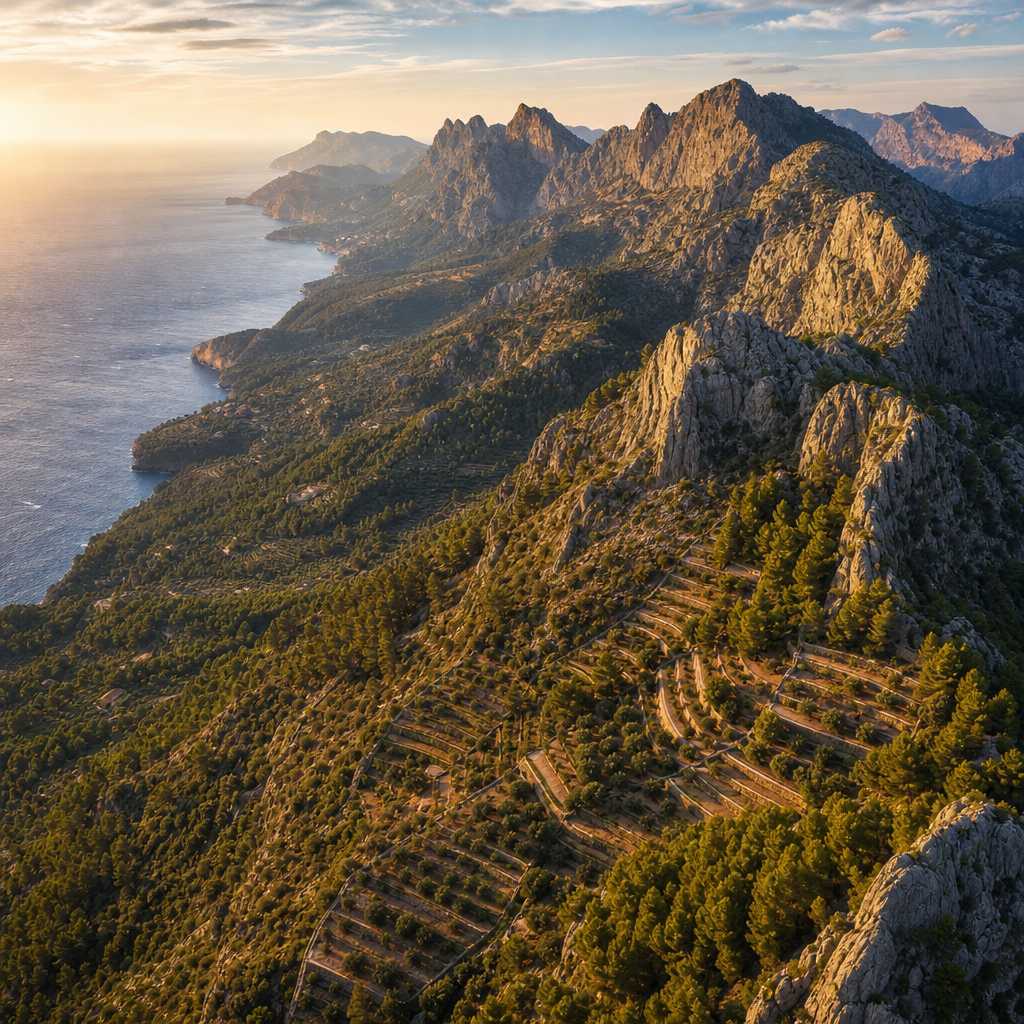
The Serra de Tramuntana is geologically distinct from most European mountain ranges. It is a fold mountain system, formed by the same tectonic compression that built the Alps, but it terminates directly into the Mediterranean Sea. In practice, this means you are walking ridgelines where one side drops into dense holm oak forest and the other side drops 400 meters into open water. There is no gradual lowland transition. The drama is immediate and constant.
The range runs northeast to southwest, acting as a natural barrier that traps moisture from northern winds, which is why the Tramuntana receives significantly more rainfall than the rest of Mallorca. This hydrological function shaped everything: the irrigation systems, the terraced agriculture, the olive groves that are in some cases over 1,000 years old. The landscape you are walking through is not wild in the sense of untouched. It is the product of Moorish, Christian, and Mallorcan agricultural engineering layered over twelve centuries.
The dry-stone walls alone are a technical achievement worth studying. The island's traditional craftsmen, known locally as margers, built and maintained thousands of kilometers of hand-fitted limestone terracing without mortar. Many of these walls are still structurally sound after 400 years. The Consell de Mallorca actively funds marger training programs today to preserve this knowledge.
UNESCO Recognition: What It Actually Means for Visitors
The Tramuntana received UNESCO World Cultural Landscape status in 2011. This is a specific category that differs from Natural World Heritage Sites. The designation covers roughly 30,000 hectares and specifically recognizes the interaction between human activity and natural environment over centuries, including the hydraulic systems, the terraced agriculture, the network of estates called possessions, and the rural architecture.
What this means practically is that the Tramuntana is actively managed and protected. Development is restricted. The villages retain their architectural character because significant alterations to historic buildings require approval. This is not bureaucratic inconvenience. It is the reason the region looks the way it does and why high-end travelers find it so visually compelling compared to overdeveloped coastal areas.
"The cultural landscape of the Serra de Tramuntana represents an exceptional example of a traditional human settlement adapted to difficult physical and climatic constraints, demonstrating a rich cultural heritage associated with its water-management system." -- UNESCO World Heritage Committee, 2011 Inscription Statement
The UNESCO Mallorca designation also has implications for responsible tourism. Visitor volumes to certain sensitive areas are monitored, and some access points have formalized entry systems. Travelers who engage with the Tramuntana through knowledgeable local guides contribute to sustainable stewardship rather than inadvertently damaging the landscape features that make it remarkable.
Tramuntana Hiking Mallorca: Routes Ranked by Experience Level
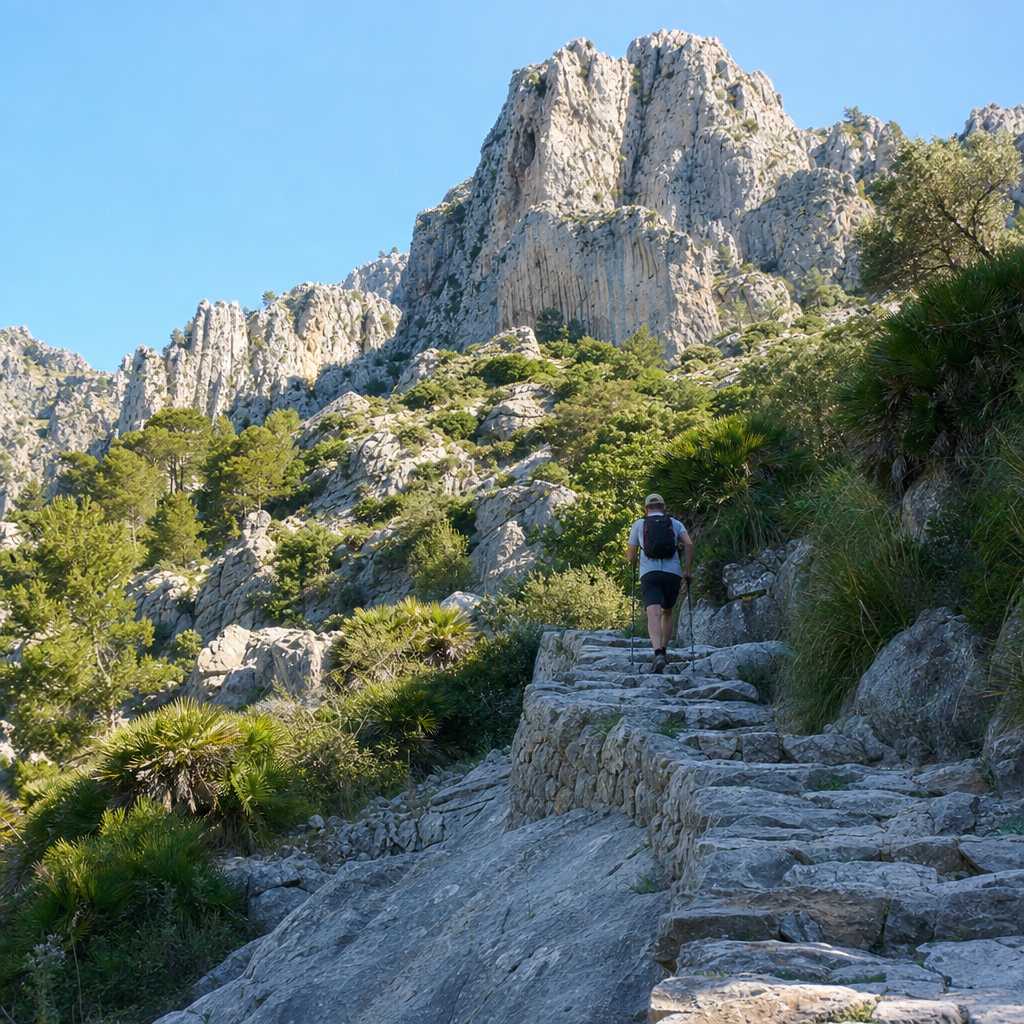
Tramuntana hiking Mallorca spans an enormous range of difficulty, from gentle cultural walks through olive terraces to full technical scrambles requiring head for heights and route-finding ability. The mistake most first-time visitors make is underestimating exposure. Mallorca's Mediterranean climate feels benign, but ridgeline routes above 900 meters can be cold, windy, and genuinely disorienting in cloud.
Entry-Level Routes for Cultural Walkers
The Cami de l'Arxiduc above Valldemossa is the most celebrated accessible walk in the Tramuntana. It ascends through pine and holm oak forest to a limestone ridge with views across the bay of Palma and toward the Catalan coast on clear days. The round trip from Valldemossa covers approximately 13 kilometers with around 500 meters of elevation gain. It is genuinely achievable for any moderately active traveler and rewards that effort with scenery that justifies the reputation.
The walk between the villages of Banyalbufar and Estellencs along the old coastal path is another strong entry-level choice. The route passes through some of the best-preserved terraced agricultural land on the island and takes around 2.5 hours at a relaxed pace.
Intermediate Routes for Confident Hikers
The ascent of Puig de l'Ofre from the Cuber reservoir offers genuine mountain character without the extreme exposure of higher routes. The summit sits at 1,093 meters and provides unobstructed views of the Tramuntana's central massif. Allow 4 to 5 hours for the complete circuit.
The stage of the GR-221 between Lluc monastery and Pollença is consistently rated as one of the most scenic days on the full route. It passes through the Puig Tomir massif and drops through dense forest to the Roman town of Pollença. This stage works well as a standalone day walk for travelers based in the north of the island.
Advanced Routes for Experienced Mountain Walkers
The ascent of Puig Massanella, Mallorca's highest accessible summit, is a serious undertaking requiring an early start and clear weather. The standard route gains 900 meters from the Font des Prat de Massanella and involves some scrambling near the summit. The views extend to Ibiza, Menorca, and the Catalonian coast on exceptional days.
A common mistake is attempting Massanella in afternoon conditions during summer. The rock becomes dangerously hot, and afternoon thunderstorms are a genuine hazard above 1,000 meters in July and August. Start before 7am or do not go at all during high summer.
Pro tip: For the GR-221 through stages, book the network of stone shelters (refugis) maintained by the Consell de Mallorca at least three months in advance for April, May, and October dates. The Refugi de Muleta near Soller and the Refugi Can Boi near Deià fill within days of the booking window opening.
The Villages Worth Visiting and the Ones Worth Skipping
The Tramuntana contains a string of mountain villages that are, by any objective measure, among the most beautiful settlements in the Mediterranean. The challenge is that two of them, Deià and Valldemossa, have become so well-known that the experience of visiting them in high season (July and August) requires real management to be enjoyable.
Deià: Genuinely Worth the Crowds If You Time It Right
Deià earned its reputation honestly. The village sits on a terraced hillside above a small cove, surrounded by olive groves that have been continuously farmed for centuries. The writer Robert Graves lived here from 1929 until his death in 1985, and the house and museum remain a compelling stop for anyone with literary interests. The village also contains some of the island's best cooking, including the celebrated restaurant at La Residencia hotel.
Visit Deià before 10am or after 5pm. The day-tripper traffic between those hours transforms the narrow streets into something closer to a theme park than a living village. Staying overnight in Deià rather than visiting as a day trip changes the experience entirely.
Fornalutx: The Better Answer for Most Travelers
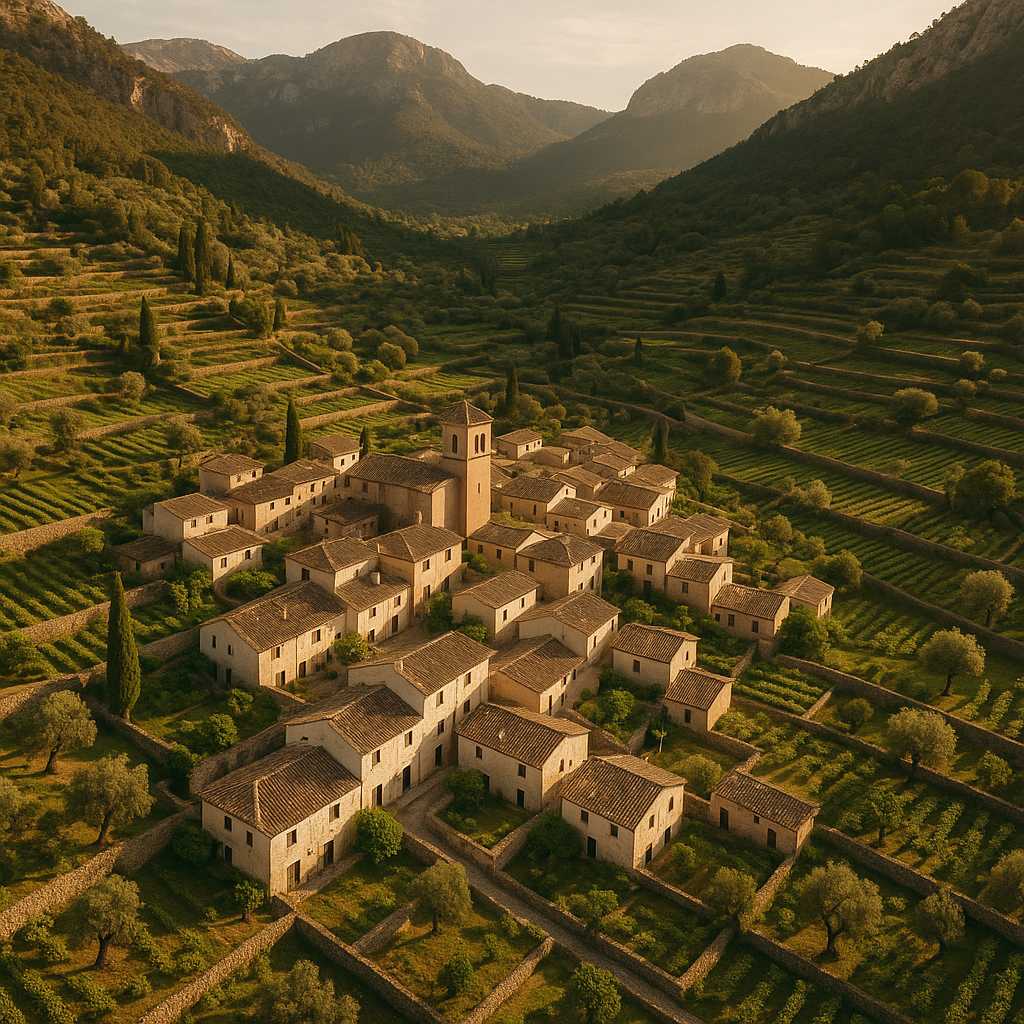
Fornalutx, a short drive above Soller, consistently wins recognition as one of Spain's most beautiful villages. The stone houses with their terracotta-tiled roofs climb a steep hillside above the orange-grove valley, and on weekday mornings outside high season, you can walk the entire village in near-silence. The bar on the main square serves excellent pa amb oli and local wine at prices that feel deliberately reasonable given the setting.
Alaró and Its Castle
Alaró sits at the eastern edge of the Tramuntana and is worth visiting specifically for the castle walk. The Castell d'Alaró occupies a near-vertical limestone pinnacle 800 meters above the village. The walk up takes around 90 minutes and passes through carob and almond groves before emerging onto a dramatic summit with a small bar-restaurant that has been operating in various forms since medieval times. The castle itself resisted a Spanish siege in the 13th century for several years. The views across the Mallorcan plain to the bay of Palma are exceptional.
Three Ways to Experience the Tramuntana: A Practical Comparison
How you access the Tramuntana determines what you actually experience. The three realistic options for discerning travelers each deliver a fundamentally different engagement with the landscape.
Approach
Best For
Key Limitations
Self-drive on the Ma-10
Flexible itinerary, independent travelers comfortable with narrow mountain roads and European driving norms
Road closures, parking scarcity at key trailheads, no local knowledge, full attention required for driving means limited landscape engagement
Organized group tour from Palma
Travelers wanting structured commentary and fixed itinerary at lower cost
Fixed stops determined by group consensus, time-limited at each location, no access to private routes or off-map experiences, no flexibility for weather or personal interest
Private guided experience with concierge logistics
Travelers who want depth, private access, and a curated experience matched to their specific interests and fitness level
Higher cost, requires advance planning and booking; the right guide relationship requires a knowledgeable intermediary to source
In practice, the self-drive approach delivers the Ma-10 scenic road, which is genuinely spectacular, but most travelers who drive it stop at the same three or four obvious viewpoints and miss the walking routes, the private fincas, and the villages accessible only on foot or by local knowledge. The private guided experience, coordinated through a specialist like Maison Mallorca, is the approach that consistently produces the most meaningful engagement with the landscape for high-expectation travelers.
Pro tip: Ask your concierge to arrange a private marger demonstration at a working terrace farm in the Tramuntana. Watching a skilled dry-stone wall craftsman explain how these structures are built and why they have survived centuries provides context that transforms the entire landscape from scenic backdrop to living document of human ingenuity.
Best Seasons and What No One Tells You About Timing
The Tramuntana has four distinct seasonal characters, and each suits a different type of traveler. The standard advice to visit in spring or autumn is correct but incomplete.
Spring (late March to early June) is the optimal season for hikers. The wildflowers on the lower slopes, particularly the endemic Mallorcan peonies and the carpets of asphodels on limestone terraces, are extraordinary in April. Temperatures at altitude sit between 10 and 18 degrees Celsius, which is ideal for sustained walking. The light is soft and photogenic throughout the day.
Autumn (October and November) brings similar temperatures and clearer skies after the summer haze. The olive harvest is underway, and the terraced groves have a working, purposeful quality that is genuinely moving. October is arguably the single best month to experience the Tramuntana if your priority is landscape and cultural depth rather than beach weather.
Summer (July and August) in the Tramuntana is manageable if you are strategic. All serious hiking should happen before 9am. The afternoons are for the villages, shaded terraces, and the limestone coves below the mountains accessible by boat. The light at sunrise and sunset in summer is exceptional and justifies the heat.
Winter (December to February) is underrated for travelers who are not primarily hiking. The mountains frequently receive snow at altitude, which is visually dramatic against the Mediterranean below. The villages are almost entirely free of tourists. Several of the best restaurants in Soller and Deià actually perform at their highest level in winter when they are cooking for discerning local patrons rather than tourist volume.
Luxury Access: How Discerning Travelers Experience the Tramuntana Differently
The Tramuntana is not a landscape that rewards passive observation from a tour bus window. It rewards engagement, and the quality of that engagement depends almost entirely on access and knowledge. This is the area where working with a specialist concierge service produces results that are categorically different from booking independently.
Private villa accommodation within the Tramuntana, rather than on the coast, places you inside the landscape from the moment you wake up. Several exceptional historic fincas and restored possessions within the UNESCO zone are available for exclusive rental, with private pools positioned to frame mountain views and kitchen gardens supplying the same ingredients that have grown on those terraces for generations. Maison Mallorca sources properties of this caliber and verifies their quality directly, which is a different process from browsing a listing platform.
Private yacht access from Soller or Port d'Andratx allows travelers to see the Tramuntana from the sea, which is an entirely different perspective and one that most visitors never access. The western cliffs between Sa Dragonera island and the Cap de Formentor are visible only by water, and the scale of the mountain-to-sea drop is genuinely staggering from that vantage point.
Exclusive dining within the Tramuntana at the level that high-expectation American travelers expect, restaurants like Es Raco d'es Teix in Deià or the dining room at Son Net in Puigpunyent, requires reservation management and local relationships. These are not tables that appear on OpenTable at short notice. They require local contacts and advance coordination, which is precisely what a service like Maison Mallorca provides as part of a full-service engagement.
The data consistently shows that travelers who engage a specialist for Mallorca report significantly higher satisfaction with mountain and cultural experiences specifically, because the island's depth is invisible to those navigating it without local knowledge. A generalist travel agency booking flights and a coastal hotel cannot replicate this depth of access.
Frequently Asked Questions
Is the Tramuntana suitable for non-hikers?
Absolutely. The Tramuntana's villages, historic estates, olive oil culture, artisan producers, and restaurant scene are entirely accessible to travelers with no interest in hiking. The scenic drive along the Ma-10 coastal road from Andratx to Pollença is one of Europe's genuinely great drives and requires nothing more than comfortable shoes for village exploration stops.
What does UNESCO Mallorca designation actually protect?
The UNESCO World Cultural Landscape designation for the Serra de Tramuntana, awarded in 2011, protects approximately 30,000 hectares of mountain landscape. It covers the dry-stone terracing, traditional water management systems, historic rural estates called possessions, and the architectural character of the mountain villages. It restricts incompatible development and requires management plans for sustainable visitor access.
How difficult is Tramuntana hiking in Mallorca compared to other European mountain regions?
The Tramuntana offers routes across a full difficulty spectrum. Entry-level routes like the Cami de l'Arxiduc are accessible to any active walker. Advanced routes like Puig Massanella involve genuine mountain conditions with significant exposure and route-finding requirements. The main hazards are heat in summer, sudden weather changes at altitude, and the exposed limestone terrain which becomes slippery when wet. It is not technically comparable to Alpine routes but should not be treated as a casual stroll above moderate difficulty levels.
What is the GR-221 Dry Stone Route and can it be done in sections?
The GR-221, known as the Dry Stone Route or Ruta de Pedra en Sec, is a waymarked long-distance trail that traverses the Tramuntana from Port d'Andratx in the southwest to Pollença in the northeast. It covers approximately 167 kilometers across 8 official stages. It is absolutely designed to be walked in individual stages rather than as a continuous multi-day journey, and each stage works as a standalone day walk. The refugi shelter network serves multi-day walkers, but individual stages are accessible directly from village starting points.
What is the best village to use as a base for exploring the Tramuntana?
Soller is the most practical base for comprehensive Tramuntana exploration. It sits at the center of the range, has strong restaurant and accommodation options, connects to Port de Soller by historic tram, and provides direct access to routes into the central massif. Deià is more atmospheric but has fewer services. Pollença works well for exploring the northern Tramuntana and the Cap de Formentor. For luxury villa stays within the range, properties near Valldemossa and Banyalbufar offer the most dramatic mountain-and-sea views.
Is the Tramuntana accessible year-round?
Yes, with seasonal awareness. Spring and autumn are optimal for hiking. Summer requires early-morning starts and afternoon caution at altitude. Winter brings occasional snow at higher elevations, potential road closures on the Ma-10 after heavy rain, and dramatically quieter village experiences. The range itself is accessible throughout the year; it is specific activities and routes that have seasonal constraints.
Have you walked in the Tramuntana or stayed in a mountain village on a Mallorca trip? Share your experience or questions below, and the Maison Mallorca team reads every response.