Why Banyalbufar Will Change the Way You Think About Mallorca Wine Country
Why Banyalbufar Will Change the Way You Think About Mallorca Wine Country
Why Banyalbufar Will Change the Way You Think About Mallorca Wine Country
Why Banyalbufar Will Change the Way You Think About Mallorca Wine Country
Mallorca wine country is not confined to Binissalem. On the west coast, the steep terraces of Banyalbufar and Estellencs meet the Tramuntana foothills and the sea, and give Malvasia a distinctly maritime setting. The story here is not a new wine route assembled for visitors. It is a local grape’s return, a landscape shaped for centuries by hand, and a small number of producers working within its constraints.
For discerning travelers, that changes the itinerary. A west-coast tasting is less about driving from one large estate to the next than understanding the relationship between grape, terrain and village. The logistics matter: cellar-door access should be confirmed in advance, and the coast road is best experienced with a driver rather than fitted around a wine tasting behind the wheel.
The first thing to understand about Banyalbufar is its infrastructure. These are not broad, level vineyard blocks. The vines occupy narrow agricultural terraces held by dry-stone walls, stepping down a steep slope toward the water. The walls, paths and historic water-management systems are part of the cultivated landscape, not decorative scenery around it.
The Serra de Tramuntana received UNESCO World Heritage status in 2011 as a cultural landscape shaped by generations of human adaptation to difficult terrain. Its agricultural terraces and dry-stone construction are among the features UNESCO recognizes. Banyalbufar sits within that wider landscape, where vineyards and stonework are inseparable from the geography.

That geography has practical consequences. Terrace plots are small and labor-intensive, and the coast road is narrow and winding. This is not a region to rush through between reservations. Give the route room, and make the tasting the day’s anchor.
Malvasia was cultivated in Banyalbufar for centuries. Local heritage sources trace its history to the terraces above the sea and document the dramatic break in 1891, when phylloxera led to the abandonment of vine planting in the area. The revival began much later: a project financed by the Balearic Islands government in 1999 produced virus-free Malvasia clones with suitable agricultural and winemaking characteristics.
The restoration took time. That matters when tasting the wines today. The local Malvasia story is not simply a fashionable rediscovery; it is the deliberate recovery of a variety tied to one particular stretch of coast. The heritage account from La Malvasia outlines the grape’s history and the role of the terraces.
One description calls this wine “born between ocean waves and dry stone.” It is a useful shorthand for the setting, not a guarantee that every bottle tastes alike. Ask the producer what you are tasting, where the grapes were grown and how the wine was made. Those details are more useful than expecting a single standardized style.
In 2026, Son Bunyola added a high-profile new chapter to the west coast’s wine revival. The estate replanted Malvasia vines on historic terraces and released its first own-label wine in more than a century in spring 2026. The release came from the 2025 harvest; the distinction is worth keeping clear when you see it described as a “2026 wine.”
The production is limited, and the wine is available through the estate rather than as a widely distributed label. Son Bunyola describes the project as a return to the estate’s nineteenth-century wine heritage, made in partnership with a nearby winery. Details of the estate’s wine and dining program are on the official Son Bunyola dining page.

The appeal here is not simply the label. It is the chance to encounter a wine project connected to the place where its grape was historically cultivated. The estate’s Malvasia belongs in the same broader west-coast conversation as the smaller Banyalbufar producers, but it is a distinct project, with its own estate history and limited allocation.
| What you are looking for | Banyalbufar and the west coast | Mallorca’s better-known interior wine areas |
|---|---|---|
| Landscape | Steep, sea-facing terraces and dry-stone walls | More open agricultural land and larger vineyard plots |
| Signature interest | Malvasia and the revival of a local grape | A broader range of grapes, producers and wine styles |
| Visit style | Appointment-led and closely tied to place | More options for building a multi-stop winery route |
| Best fit | Travelers interested in landscape, heritage and a focused tasting | Travelers seeking several winery visits in one day |
This is not a ranking. The west coast is a different allocation of time: fewer stops, more attention to terrain, and a stronger connection between wine and the built landscape.
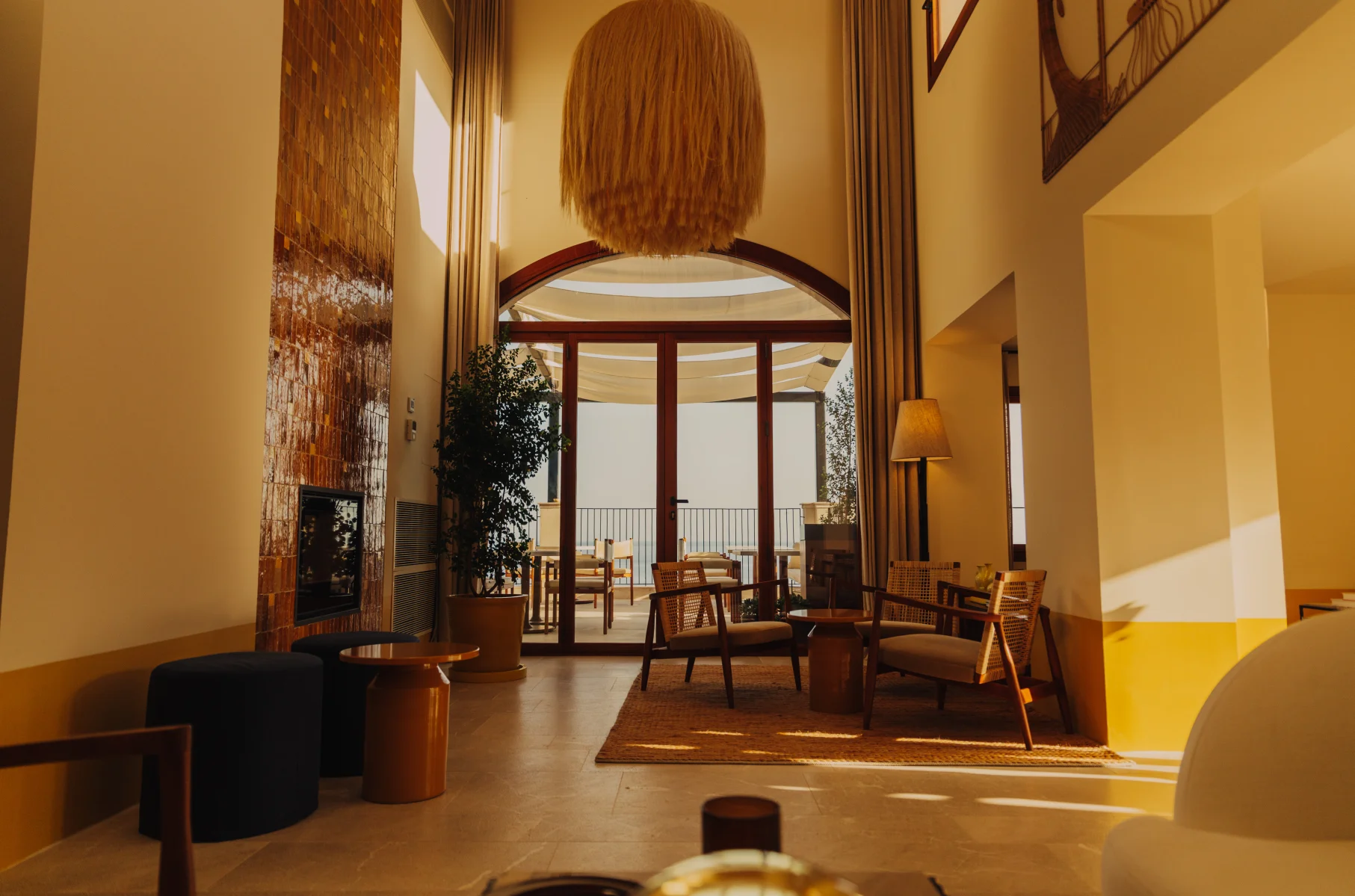
Opened on 3 July 2026, Gran Hotel Margalida is Banyalbufar’s new boutique address above the historic terraces. Its La Ostrería concept pairs oysters, French fries, white wine and cocktails with Mediterranean views. The key detail for planning is access: the hotel’s current information describes La Ostrería as for hotel guests only.
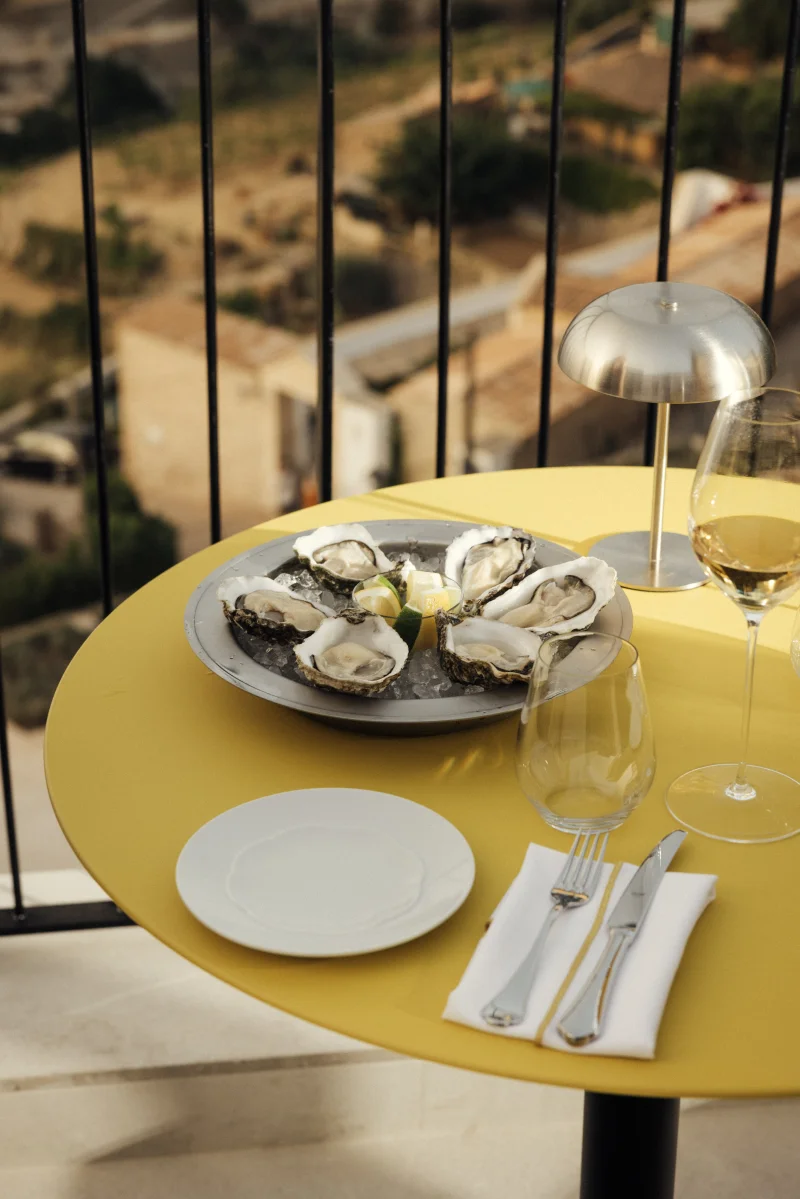
Do not structure a day trip around an assumed public lunch there. If La Ostrería is a priority, consider an overnight at Gran Hotel Margalida and confirm dining arrangements with the hotel before travel. Its dedicated La Ostrería page provides current details. The hotel’s season is listed through 20 December 2026, so check dates directly if you are planning a late-year stay.
The efficient version is a private, pre-arranged visit, not an improvised sequence of winery stops. Contact the cellar in advance to confirm tasting availability, language, group size and whether the visit includes the vineyard. Then build the drive around that appointment, leaving time to experience the coast road without rushing.
Our team can arrange a driver for the west-coast route, coordinate a cellar-door tasting where available, and plan a meal around your access and timing. If you are staying at Margalida, we can also ask the hotel to confirm whether La Ostrería fits your schedule. The distinction is important: a winery appointment, a hotel dining reservation and a public restaurant booking are not interchangeable.
For guests looking to extend the route, our Mallorca experiences include private vineyard visits and tailored island excursions. Pair the coast with a stay in one of our curated Mallorca residences, or use our Deià insider guide to plan a wider Tramuntana itinerary. Whether you are searching for luxury fincas Mallorca, a luxury villa Mallorca, or a focused day of private tours Mallorca, the right sequence depends on the property, producer availability and your appetite for the road.
Banyalbufar changes the way you think about Mallorca wine country because the wine cannot be separated from the place. The terraces are the vineyard’s infrastructure. Malvasia is its historical thread. And the coast road determines how the day should unfold. For a tailored Mallorca luxury travel guide, and bespoke travel Mallorca planning that accounts for those realities, tell us what you want to experience.
Tell us your dates, your group and what you'd like the island to feel like. We arrange the villa, the tables, the boats and the days in between.
Start Your Inquiry →